Category: Uncategorized

  • Colleen Rothschild Skincare Review (my top 3 favorite products)

    Colleen Rothschild Skincare Review (my top 3 favorite products)

    Use TERILYN20 for 20% off Colleen Rothschild

    I used Colleen Rothschild skincare for the first time about eleven years ago. I had just turned 30 and was working in Corporate America, fighting some serious adult breakouts. I was so embarrassed by my skin that I even called in sick to work a few times. However, someone from Colleen Rothschild reached out to me via my blog. I had never heard of the brand, but they offered to send me some products to try, and I happily accepted. I was willing to try anything.

    When the products arrived, it was a night-and-day experience compared to the other products I’d used. They felt different, smelled different, and applied differently. I finally understood what high-quality skincare was all about.

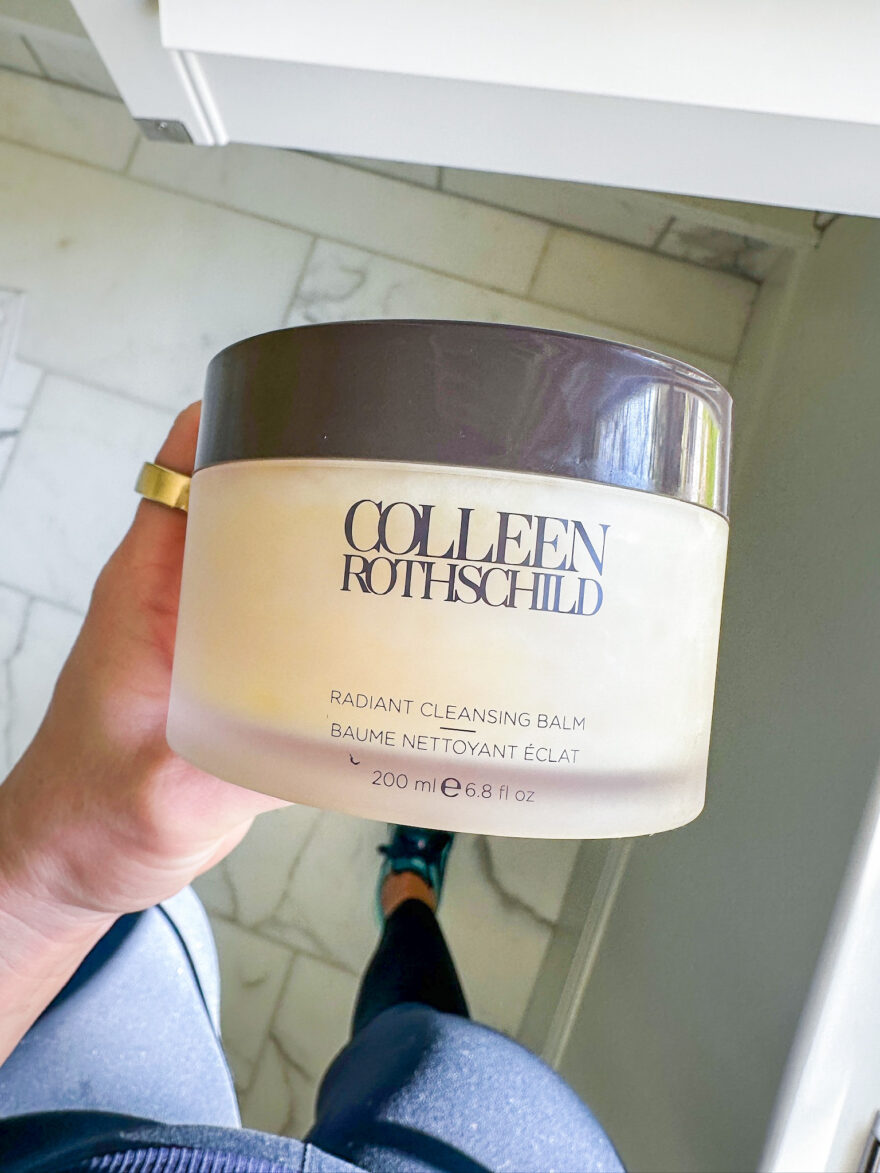
    After I used the Colleen Rothschild Cleansing Balm for a week, my skin started to clear up. And that is what truly began my skincare journey.
    Colleen Rothschild Skincare Review

    While I’ve been using Colleen Rothschild products for 11+ years, I don’t love all of them. Their moisturizers don’t cut it for me, but some of their products are absolute must-haves in my routine. (I’ll list my favorites below and what to skip.) I also wish that they had a more non-toxic focus like my other favorite skincare brands, but I do trust the founder’s formulations, given her extensive background in the beauty industry, and that she is also a breast cancer survivor.

    If you’re wondering whether or not Colleen Rothschild is worth the money, I would say definitely. The results have been almost immediate across the board for the products I love most, which I’ll dive into below.

    I genuinely consider Colleen Rothschild luxury skincare. I recommend starting with the Discovery Collection to try their best-sellers in smaller sizes before committing to full size. Colleen Rothschild is pricier than drugstore brands but comparable to, and often less expensive than, other high-end lines.

    Use code TERILYN20 for 20% off site-wide.

    Skincare

    The Radiant Cleansing Balm, Illuminating Tinted Eye Cream, and Dual Enzyme Polish Mask are my top 3 favorites I always recommend starting with, followed by the rest of their skincare.

    Radiant Cleansing Balm

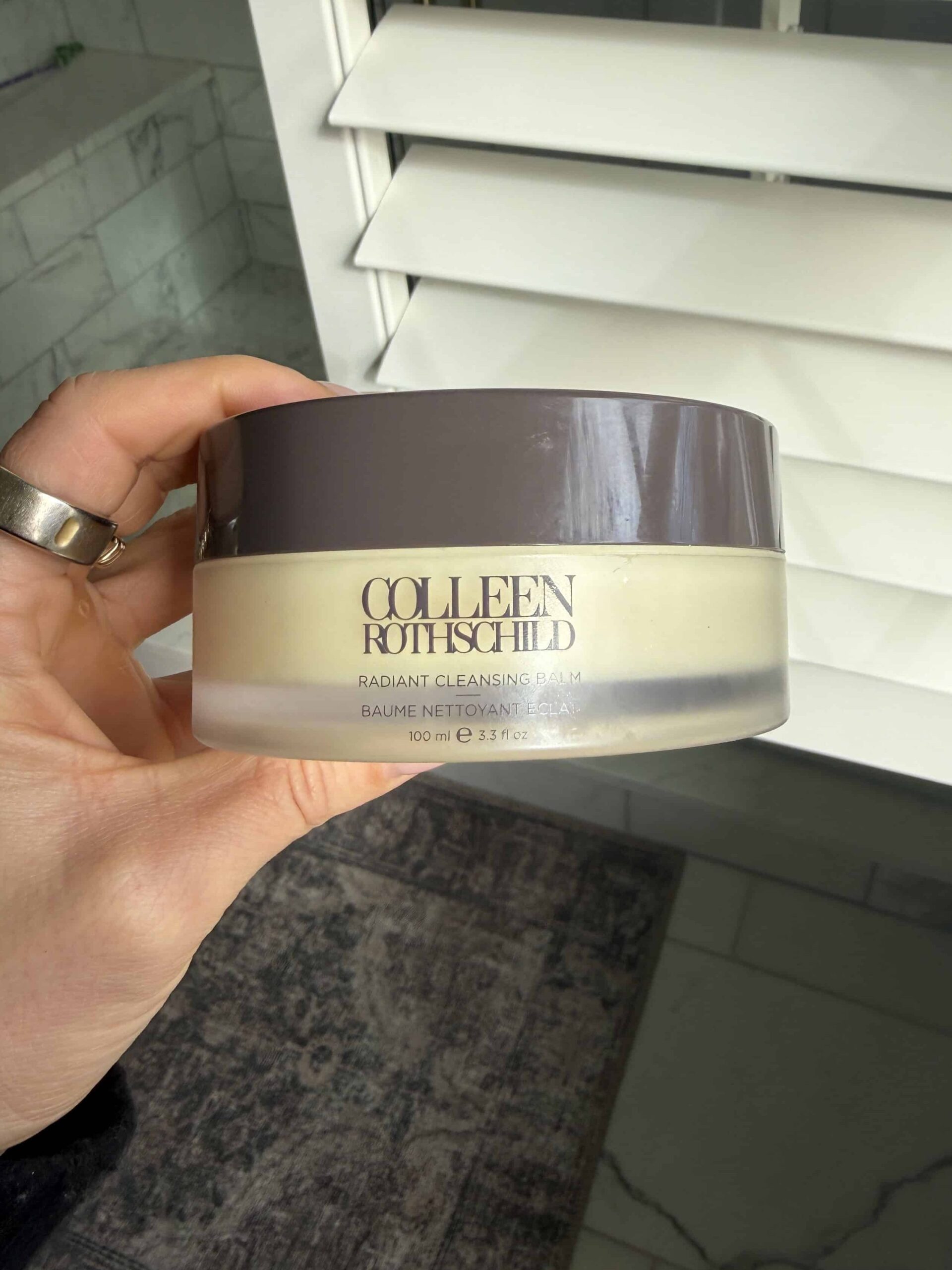
    Starting with the O.G. The Radiant Cleansing Balm. This is the first product I used from Colleen Rothschild that made me fall in love with the brand.

    I also LOVE how thick and hydrating this balm is. It’s made with a blend of loofah seed and moringa oil, which helps renew the outer layer of skin while also restoring the balance. The smell is amazing too – like the best day spa. I look forward to using this at night.

    I’ve tried every popular cleansing balm out there (including Elemis, that everyone is obsessed with, and non-toxic brands), and I still go back to this one. It’s more hydrating, smells better, and never stings my eyes. The formula is the creamiest of all and is simply more enjoyable to use.

    I have a full review of the cleansing balm here.

    Turn on your JavaScript to view content

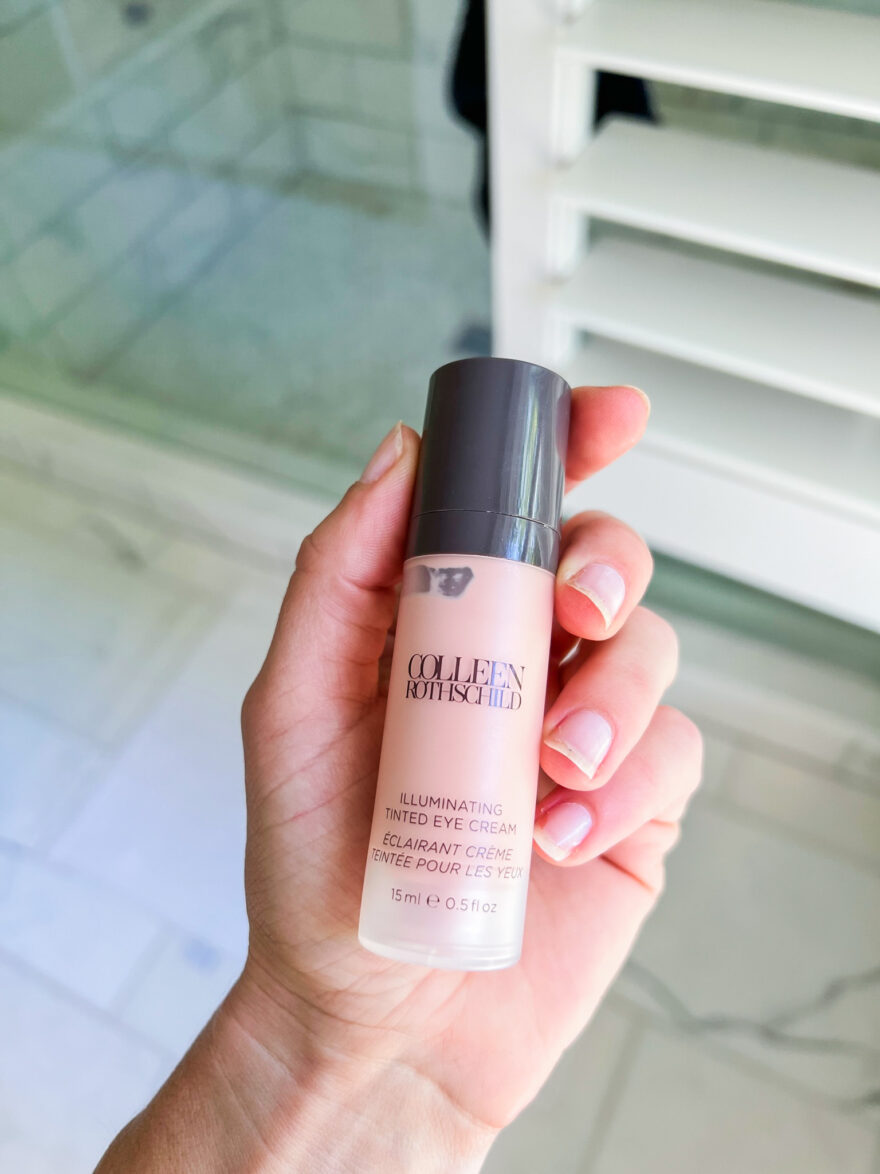
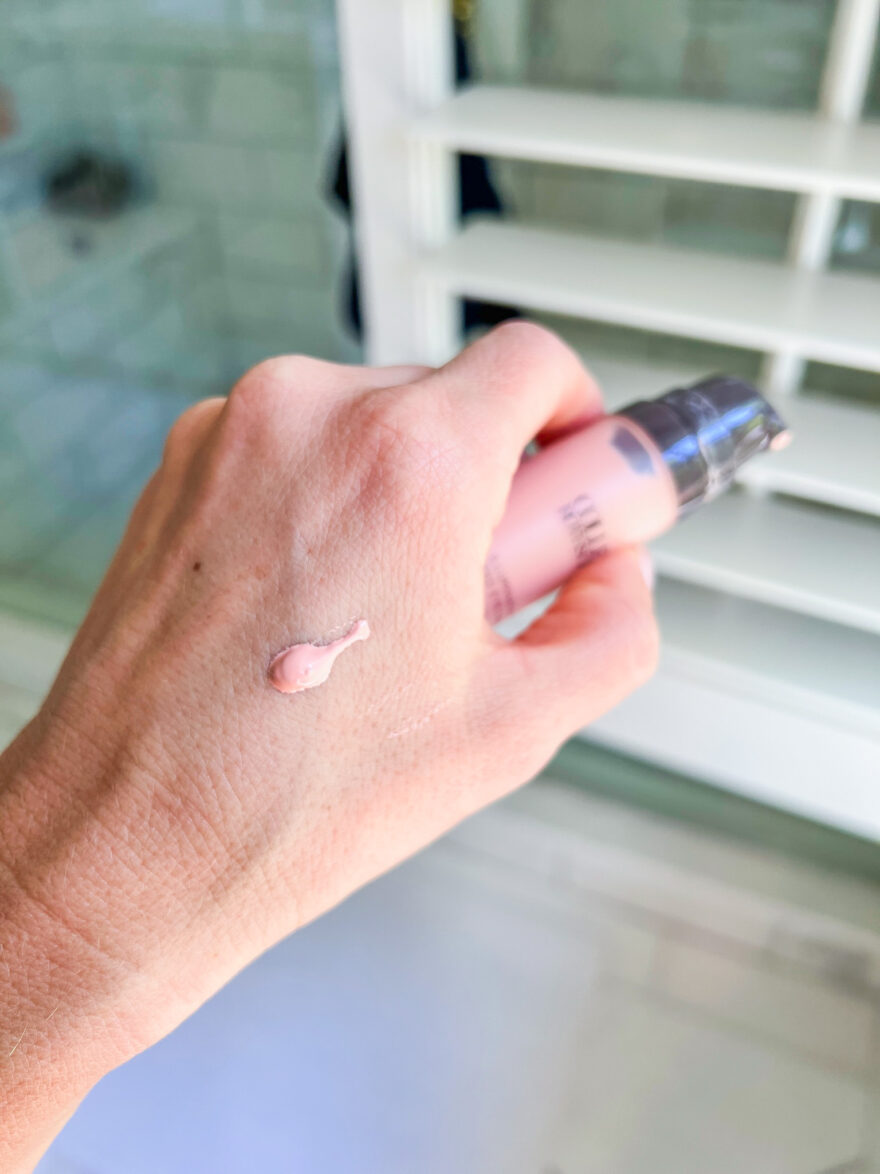
    Illuminating Tinted Eye Cream

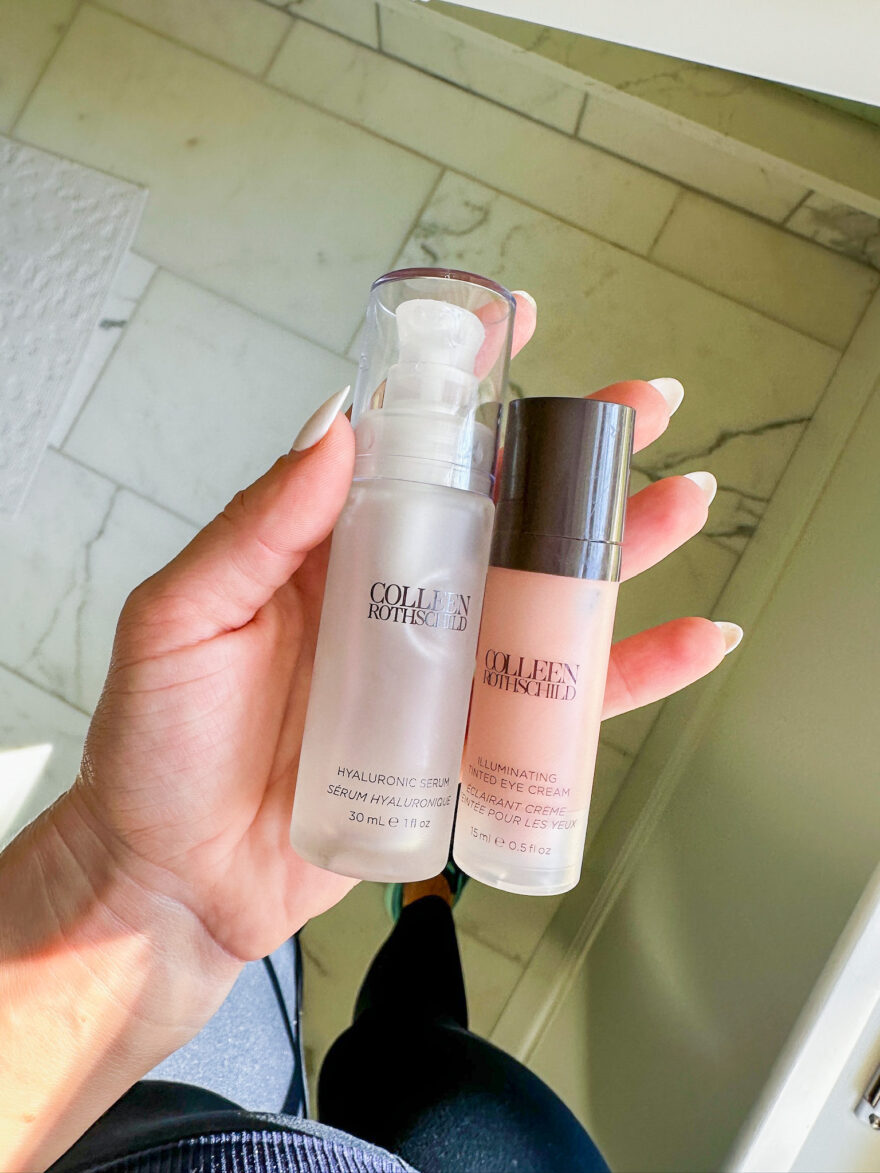
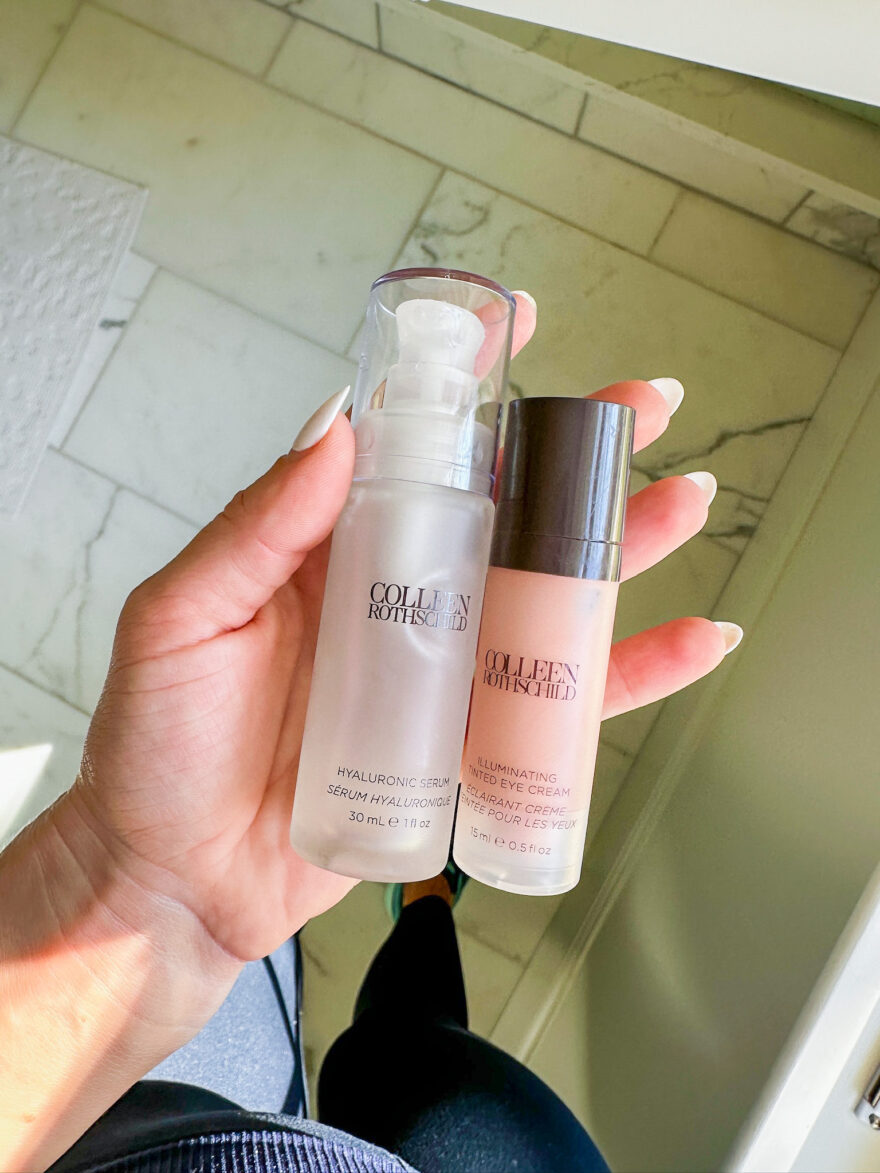
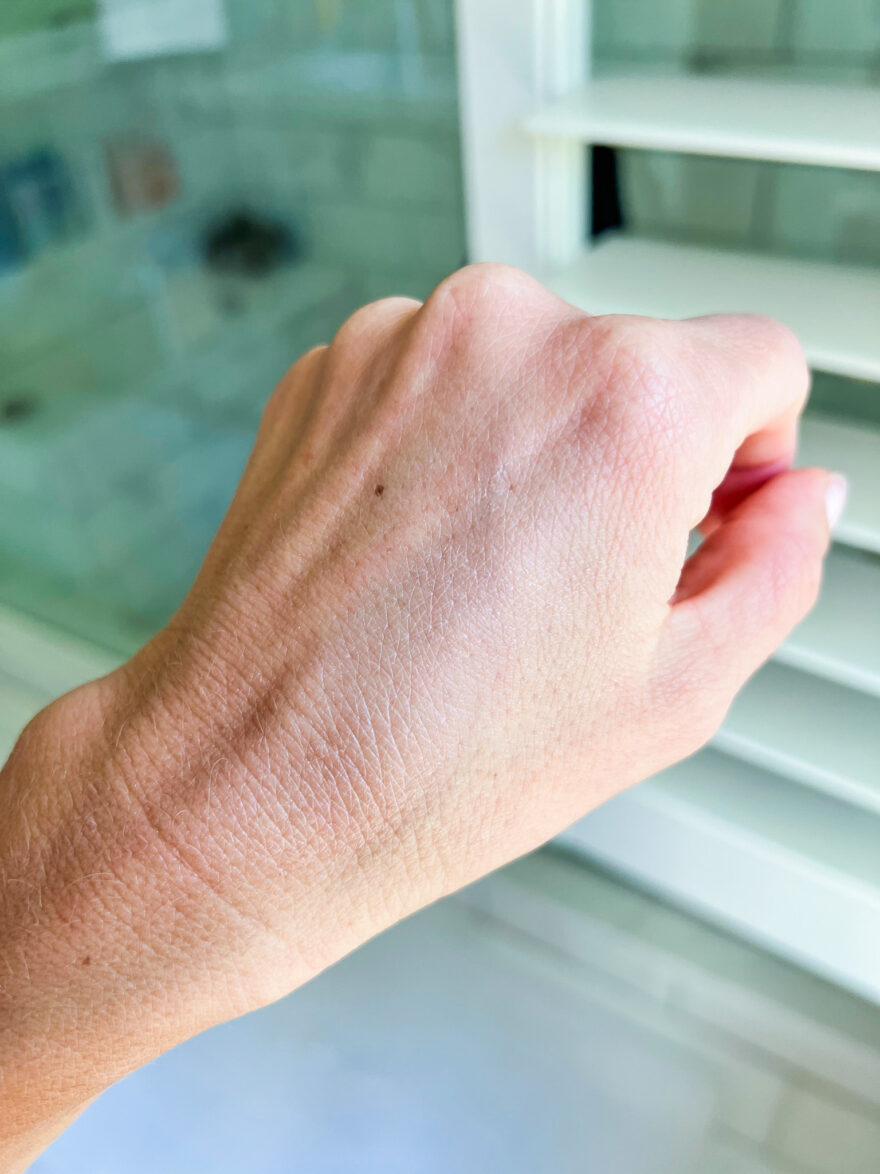
    I’m pretty picky when it comes to eye creams. However, this Illuminating Tinted Eye Cream is one of the best I’ve ever tried for covering dark circles. Not only does it address dryness, puffiness, fine lines, and wrinkles, but the light peach tint also helps brighten your under-eyes and mask blue-toned shadows. I use this only in the morning since I don’t want to waste the product at night. I think of this as “fake awake” eye cream. This sells out constantly, so I always recommend that you add it to your cart if it’s in stock while shopping.
    Turn on your JavaScript to view content

    Dual Enzyme Polish

    This Dual Enzyme Polish face mask is one of my must-have products in my skincare routine. It’s gentle but I’m always blown away by how clear and bright my skin looks after just 10 minutes! It’s like I had a facial at home. This mask uses a blend of fruit enzymes and AHA to exfoliate and also contains comfrey and argan oil to rebalance the skin.

    I use this once a week or so – I keep it in the shower so it’s super convenient. I just put it on while I wash, shave, etc. and then remove at the end of the shower. You apply it all over your skin in a thin layer, leave it on for 5-10 minutes, and then gently wash it off, massaging your skin with the beads.


    Turn on your JavaScript to view content

    Hyaluronic Acid Serum

    The HA serum is another great product from Colleen Rothschild. It’s designed to hydrate tired and dehydrated skin. Compared to other HA serums I’ve tried, the texture of this specific serum is really nice because it’s lightweight and layers well underneath other serums.


    Turn on your JavaScript to view content

    Gentle & Clear Line

    If you’re looking for a skincare line that’s effective AND gentle, the Gentle & Clear Collection from Colleen Rothschild is a winner, especially for those with sensitive, blemish-prone skin. My husband uses this line because he has sensitive and oily skin and his skin looks the best it has in decades.


    Turn on your JavaScript to view content

    Face Oil N°9

    I’ve truly never used a more luxurious face oil than this N°9 Face Oil (and I’ve tried LOTS of face oils over the years!). The texture is unbelievable… like a blend of velvet and silk. Plus, it smells lovely. It’s incredibly hydrating and includes ingredients that protect from oxidative stress (which contributes to wrinkles and dark spots). It’s not greasy, but instead absorbs quickly, leaving your skin silky and smooth.

    The best way to apply this is after your night cream to help lock in the moisture. I use this after my night cream, and it’s helped my super dry skin SO much.


    Turn on your JavaScript to view content

    Intense Hydrating Mask

    This Hydrating Mask is the first overnight face mask I ever used, and I STILL remember what it felt like the first time I used it! Throughout the first weeks of postpartum after having Charles, I would apply this to my face every time I got up in the middle of the night to nurse. It smells heavenly, feels light, but hydrates SO well. (It’s one of my postpartum must haves!) I actually like applying this before long flights to help keep my skin hydrated.


    Turn on your JavaScript to view content

    Glycolic Acid Peel Pads with Blue Agave

    I use the Glycolic Acid Peel Pads once a week. If you’ve never used a peel skincare product, they often have a tingling effect. However, these Glycolic Acid Peel Pads are formulated for sensitive skin, so they don’t tingle the way typical peel pads do.

    These peel pads use a 10% blend of glycolic and lactic acids, which help target fine lines and wrinkles, hyperpigmentation, and dark spots. My skin feels SO refreshed after using these. I use these 1-2x a week, but not on the same night as the dual enzyme polish.


    Turn on your JavaScript to view content

    Age Renewal Super Serum

    I like layering serums and skincare, but if you want a one-product-does-it-all, the Age Renewal Super Serum is what you want. It fights the six signs of aging: texture, dehydration, elasticity, fine lines, radiance, and tone. It’s gentle and effective, and I often take this when traveling to save space.


    Turn on your JavaScript to view content

    Retinol Supreme Night Oil

    The Retinol Supreme Night Oil is the best of two worlds. It has the powerful regenerative and anti-aging benefits from retinol, but it also contains vitamin C, which works with retinol to brighten and even your skin tone while promoting cell turnover. Since it’s an oil, it’s much less aggressive on sensitive skin than other retinols and retin-A can be, so it’s a great option for new retinol users. I noticed results after using this just one time – my skin was brighter and smoother!

    While almost everything from Colleen Rothschild is safe for pregnancy, this is not. I stopped using this both times I got pregnant. I recommend switching to a pregnancy safe “retinol”.


    Turn on your JavaScript to view content

    Retinol Supreme Eye Serum

    The Retinol Supreme Eye Serum goes hand in hand with Retinol Supreme Night Oil. It has the same blend of retinol and vitamin c, which is a powerhouse duo. While the vitamin C in the Retinol Night Oil evens skin tone, the main benefit of the vitamin C in the eye serum is antioxidant support. The serum is very gentle since the skin around your eye is delicate. It’s best to follow this with an eye cream.

    Again, if you’re pregnant or breastfeeding, I recommend using Oliveda’s eye elixir for the time being.


    Turn on your JavaScript to view content

    Hair Care

    You can see the rest of my hair care routine broken down in this blog post.

    Renew & Replenish Clarifying Duo

    The Renew & Replenish Clarifying Duo is WONDERFUL. The shampoo has a great lather and is infused with scalp-rebalancing probiotics, strengthening peptides, and refreshing botanicals like eucalyptus and rosemary that gently remove build-up. The conditioner is super hydrating and smooths my hair. It’s great for all hair styles and textures, and it smells amazing (I’m sensitive to scents, so if I like it, it’s good).

    JavaScript is currently disabled in this browser. Reactivate it to view this content.

    Quench and Shine Restore Shampoo and Conditioner

    I’ve also used the Quench and Shine Restore Shampoo and Conditioner in the past and was very happy with it. I found that it leaves my (thick) hair super smooth and shiny.


    Turn on your JavaScript to view content

    Quench & Shine Restorative Mask

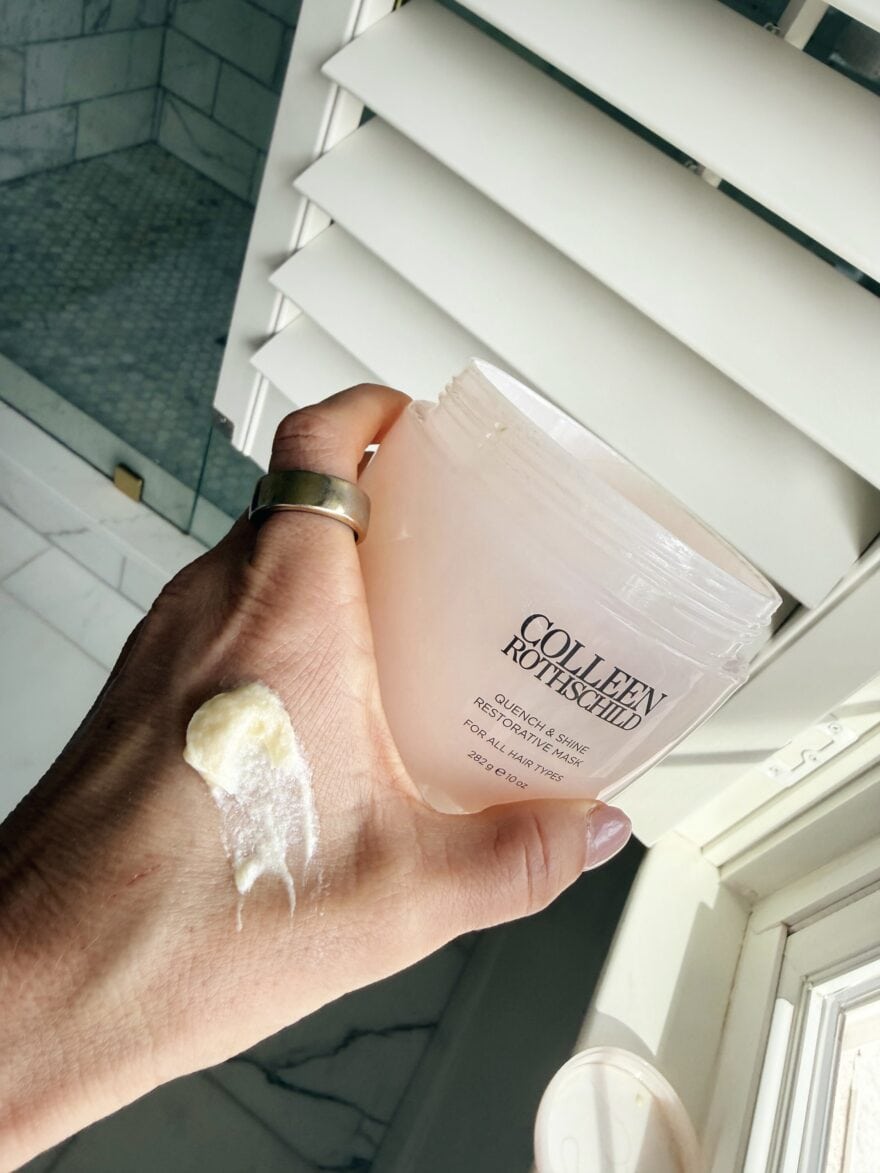
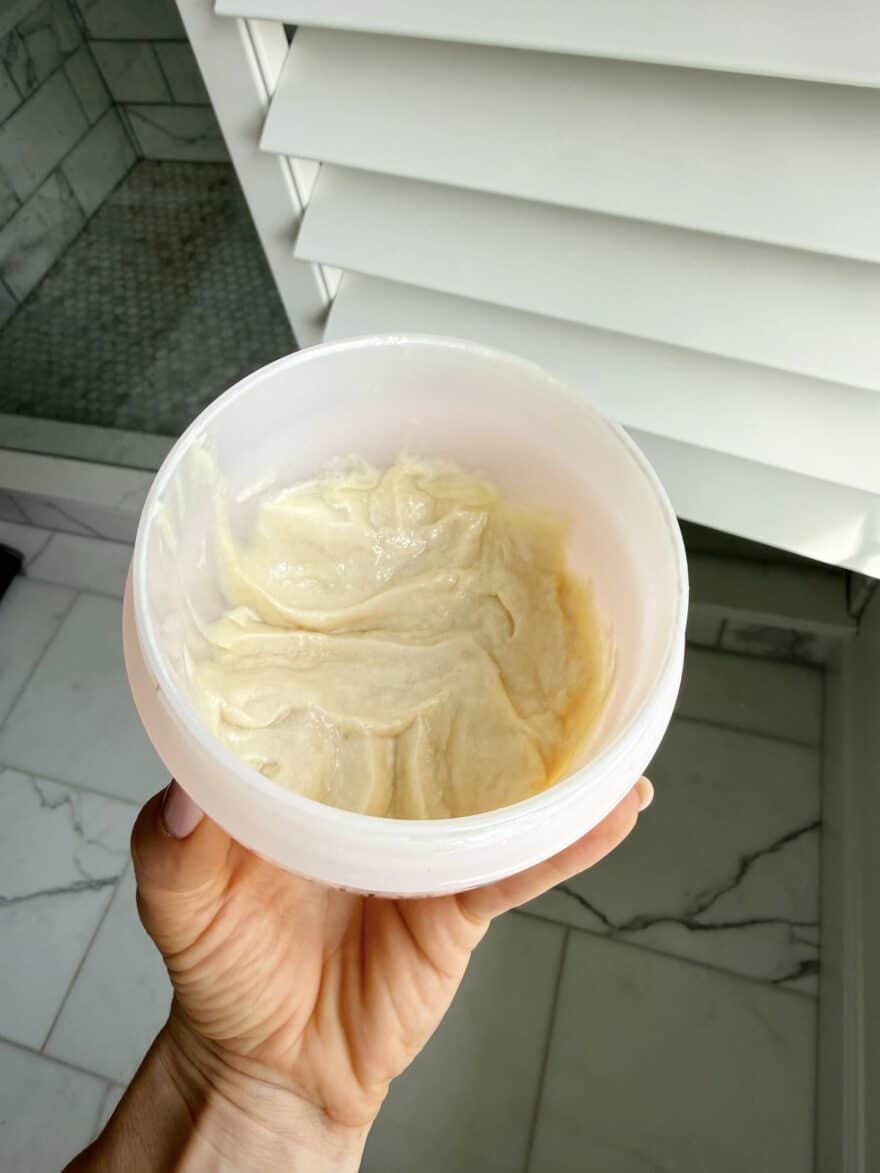
    I mentioned this above as one of my top three favorites. This hair mask is one of my go-to’s (such a go-to in fact, that I’ve been using it instead of my regular conditioner lately). The scent is amazing and the container lasts SO long.
    Turn on your JavaScript to view content

    Products I’d Skip

    Smooth & Shine Hair Serum

    Really didn’t do much for me. My hair is pretty thick, but I didn’t notice much improvement.

    Complete Eye Cream

    As I mentioned above, I prefer the OneSkin Eye Cream or the Illuminating Tinted Eye Cream for extra brightening.

    Who is Colleen Rothschild?

    Colleen Rothschild, the founder of Colleen Rothschild Beauty, has been in the beauty industry for over 30 years. At the beginning of her career, she worked on the manufacturing side of beauty where she spent time behind the scenes in a lab. Through that experience, she learned about ingredients and methods that provide real results (and the ones that didn’t).

    Colleen started her first retail-based beauty business with her husband Stan, which they eventually sold to a competitor. Colleen Rothschild is their newest venture and is still a relatively small business, which I didn’t realize until I met her in Dallas two years ago. I love that aspect since I know each of their employees truly cares about getting great products out into the market (and as I’ve gotten to work with their team over the last few years, it has only made me love them more. They are LOVELY). Additionally, Colleen is a breast-cancer survivor so she understands the importance of safe formulations and they even have a better designed to help with breast self-exams.

    Are Colleen Rothschild Products Clean?

    Colleen Rothschild products are made with a blend of natural ingredients and advanced scientific ingredients. They do not use parabens, SLS/SLES sulfates, triclosan, formaldehyde, PABA, toulene, or benzene in any of their products. They are not certified gluten free or vegan.

    Another great thing about Colleen Rothschild is that most of their products are safe for pregnancy or breastfeeding!  Of course, you’d want to discontinue the use of the retinol products while pregnant or breastfeeding, but the rest should be just fine to keep using. As always, consult with your doctor since everyone’s health is different.

    Is Colleen Rothschild Cruelty-Free?

    Colleen Rothschild products are never tested on animals, which follows their cruelty-free philosophy.

    Colleen Rothschild Before and After

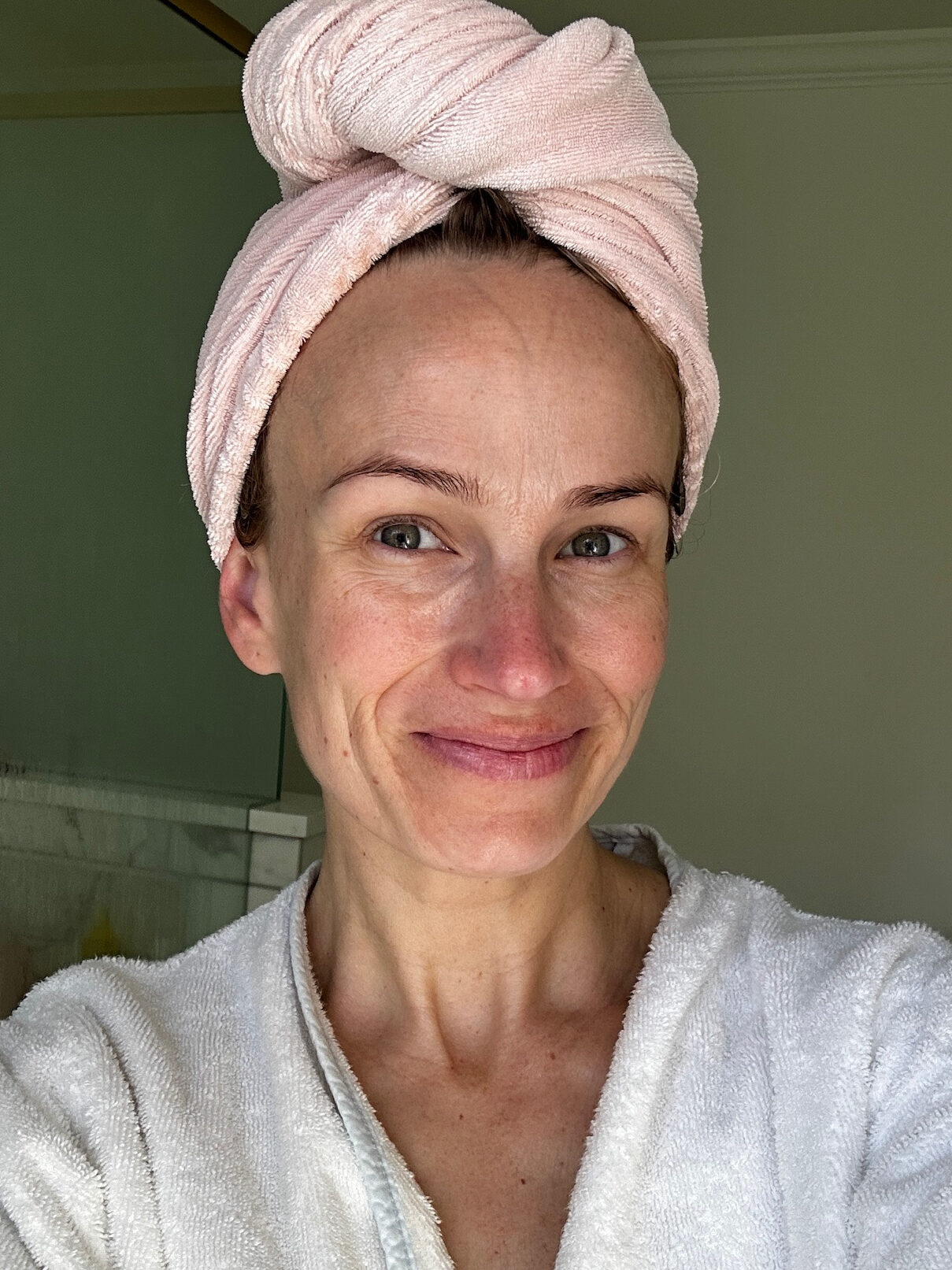
    It’s hard to find a great before and after photo to show the results of my favorite Colleen Rothschild products since I have used so many high quality skincare brands for over a decade. But the picture below is when I VERY first started using Colleen Rothschild and finally ditched Cerave and other popular skincare products full of nasty ingredients.

    woman showing her skin before using Colleen Rothschild Before

    And here’s what my skin looks like today, eight years later. If that doesn’t convince you that the quality of your skincare matters, I don’t know what will. 😉

    Where to Buy Colleen Rothschild

    The best place to buy is directly from Colleen Rothschild since you can use my TERILYN20 discount code on your order. However, if you need your products ASAP, Amazon also carries Colleen Rothschild.

    Happy shopping!

    Use code TERILYN20 for 20% off site-wide!

    Shop The post


    Turn on your JavaScript to view content

    The post Colleen Rothschild Skincare Review (my top 3 favorite products) appeared first on TeriLyn Adams.


  • THE ARCHIVIST OF NOW: INÈS TRAFFORD IS PROTECTING ART HISTORY BEFORE IT’S HISTORY

    THE ARCHIVIST OF NOW: INÈS TRAFFORD IS PROTECTING ART HISTORY BEFORE IT’S HISTORY


    In the art world, attention usually focuses on artists, curators, collectors, or institutions. Yet many of the decisions that determine how a work is preserved, interpreted, and ultimately remembered happen behind the scenes, guided by professionals who work with discretion but considerable influence. Inès Trafford belongs to a new generation reshaping this landscape, working at the intersection of archives, law, and art history to help artists maintain control over how their work enters the historical record.

    An independent consultant specializing in art and archives, Trafford has built a practice centered on the long-term preservation of artistic work. Instead of focusing only on exhibitions or market visibility, she works on the underlying structures that determine how artists’ careers are documented, organized, and protected over time. Her approach brings together legal awareness, academic research, and curatorial strategy.

    She gained experience working in commercial galleries and art organizations before turning her focus to the challenges artists face when trying to preserve their work after exhibitions and sales have ended. Her consulting work has included collaborations with artists, scholars, and institutions, including projects connected to art historian Jack Flam and archival initiatives involving major cultural organizations.

    Contemporary art generates an enormous amount of material, including correspondence, documentation, research files, archives, and unpublished works. Without careful organization, much of it risks being lost or overlooked in the historical record.

    A significant part of Trafford’s work involves helping artists structure their archives so future research, exhibitions, and museum collaborations can develop on solid foundations. In practice, this may include creating catalogues, coordinating with museums and research institutions, or designing systems that allow an artist’s body of work to be preserved and studied for decades to come.

    The way an archive is organized can directly shape how historians, curators, and institutions interpret an artist’s career in the future.

    Alongside this work, Trafford also contributes to cultural memory from an editorial perspective. She currently serves as Tributes Editor at The Brooklyn Rail, a respected international publication on art and culture, where she develops tribute essays dedicated to influential figures in contemporary art, helping document their careers and impact on recent cultural history.

    She also co-founded Cuadra Projects, an independent curatorial platform that commissions and presents site-specific exhibitions exploring the relationship between art, architecture, and history. There, she plays a central role in shaping the curatorial vision, project development, and international collaborations behind each exhibition.

    The platform’s debut project, The Paper Room, was presented during Milan Design Week and brought together an original collection of furniture, lighting, and works on paper created by designers Joséphine Bourdariat and Luana Meneux.

    Inès Trafford represents a quiet yet significant shift within the art world. She helps artists structure and protect their work while their careers are still evolving, ensuring that the art produced today can be properly understood, preserved, and studied in the future.

    CONNECT WITH INÈS TRAFFORD 

    INSTAGRAM.


    The post THE ARCHIVIST OF NOW: INÈS TRAFFORD IS PROTECTING ART HISTORY BEFORE IT’S HISTORY appeared first on LADYGUNN.

  • FEMMECORE UNLEASHED: LITTLE MISS NASTY IS REWRITING THE RULES OF THE STAGE

    FEMMECORE UNLEASHED: LITTLE MISS NASTY IS REWRITING THE RULES OF THE STAGE


    At a moment when conversations around feminine power are becoming louder and more unapologetic, Little Miss Nasty has emerged as one of the most striking live expressions of Femmecore. The Los Angeles performance collective blends choreography, music, and provocative visual aesthetics to create a stage language where femininity appears fierce, sensual, and completely unrestrained.

    The project has become one of the most striking stage productions within the alternative performance circuit. Their shows blend high-precision choreography with an aesthetic that contrasts glamour and raw energy, creating an experience that is both visually and emotionally powerful.

    Within the Little Miss Nasty universe, Femmecore takes shape through bold visual language and unapologetic performance. Sensuality, aggression, glamour, and theatricality collide in choreography, styling, and staging that push beyond conventional ideas of femininity. The result is a show where individuality is amplified, and expression is intentionally unrestrained.

    A Little Miss Nasty show is built as a space for release. The stage sets the tone, but the energy quickly spreads through the room as the audience responds in real time. People scream, dance, and move with the rhythm of the performance, turning the show into a shared surge of sound, movement, and unapologetic presence.

    The collective’s growth is also reflected in its international cast, which brings together talent from different parts of the world. Among the most notable additions in late 2024 is Paige Patton, the Australian dancer and vocalist whose presence strengthens the project’s global reach and who is now part of the core group of performers bringing the show to stages around the world.

    Alongside Patton, Little Miss Nasty brings together artists from multiple countries, including Estonian dancer Laura Pakasaar and American performers Kayla Brenda and Gina Katon, forming a collective that merges diverse performance styles within a single artistic vision.

    As the project continues to expand Femmecore to new cities, Little Miss Nasty is becoming an artistic platform where feminine energy is expressed without filters, turning each performance into an intense and unforgettable experience.

    Photos /  Jason Little

    CONNECT WITH LITTLE MISS NASTY
    Instagram | Facebook | TikTok


    The post FEMMECORE UNLEASHED: LITTLE MISS NASTY IS REWRITING THE RULES OF THE STAGE appeared first on LADYGUNN.

  • Backache!

    Backache!

    Bones are cracking with pain.

    Applying gel won’t help so much.

    Couldn’t sit up straight.

    Keeping pillows under the legs.

    Also gets us some rest.

    Continuous standing too long is bad.

    High chances of fatigue.

    Especially lots of problems in the future.

  • Spring + Easter Basket Gift Guide for Teens & Tweens

    Spring + Easter Basket Gift Guide for Teens & Tweens

    Spring is [almostttt] here, which means sunshine, birds chirping, and Easter baskets! 🐰 While baskets are easy to fill for the little kiddos, teens and tweens can feel a bit trickier.

    Don’t worry – LIY is here to help! We’ve put together this Spring Gifts + Easter Basket Guide for Teens & Tweens with fun ideas they’ll actually like! Think trendy accessories, beauty favorites, tech gadgets, sporty finds, and a few treats!

    If you’re putting together a basket or just need a gift for a teen or tween this season, we hope this guide helps make shopping a little easier!

    P.S. Easter ideas ALL from Amazon this way!

    Trending Gifts for Teens + Tweens

    Trending teen boy gifts [click arrows on sides to scroll for more!]:

    Trending teen girl gifts [click arrows on sides to scroll for more!]:

    Easter Basket Ideas for Teens + Tweens

    1 / 2 / 3 / 4 / 5 / 6 / 7 / 8 / 9 / 10 / 11 / 12 / 13 / 14 / 15

    More teen + tween Easter basket ideas [click arrows on sides to scroll for more!]:

  • The Best Amazon Swimsuits and Coverups

    The Best Amazon Swimsuits and Coverups

    My love for summer is something else. Give this girl some warm weather, sunshine, and a cocktail near the water, and my heart is content. Sweet, sweet summertime, you are so good to me. And when it comes to fashion, summertime means swimsuits and coverups!

    This time of year we’re all checking on the status of our swimsuits and coverups and replacing a few with fresh ones! We’ve all probably bought a swimsuit or two from Amazon, and quickly realized that there are some hits and a whole lot of misses along the way! So today the Living In Yellow Team is sharing some of our favorite finds. 

    Whether you’re heading somewhere tropical [jealous, take me with!] or sipping cocktails in your inflatable backyard kiddie pool, we’ve got you covered with swimsuits and coverups, all from Amazon!

    Want even more swimsuit + coverup finds from the years? See them here!

    Erin’s Swimwear Finds [5’4″ typically a M/L in swimwear]

    Black Swimsuit [true to size, wearing in large] // Sunglasses

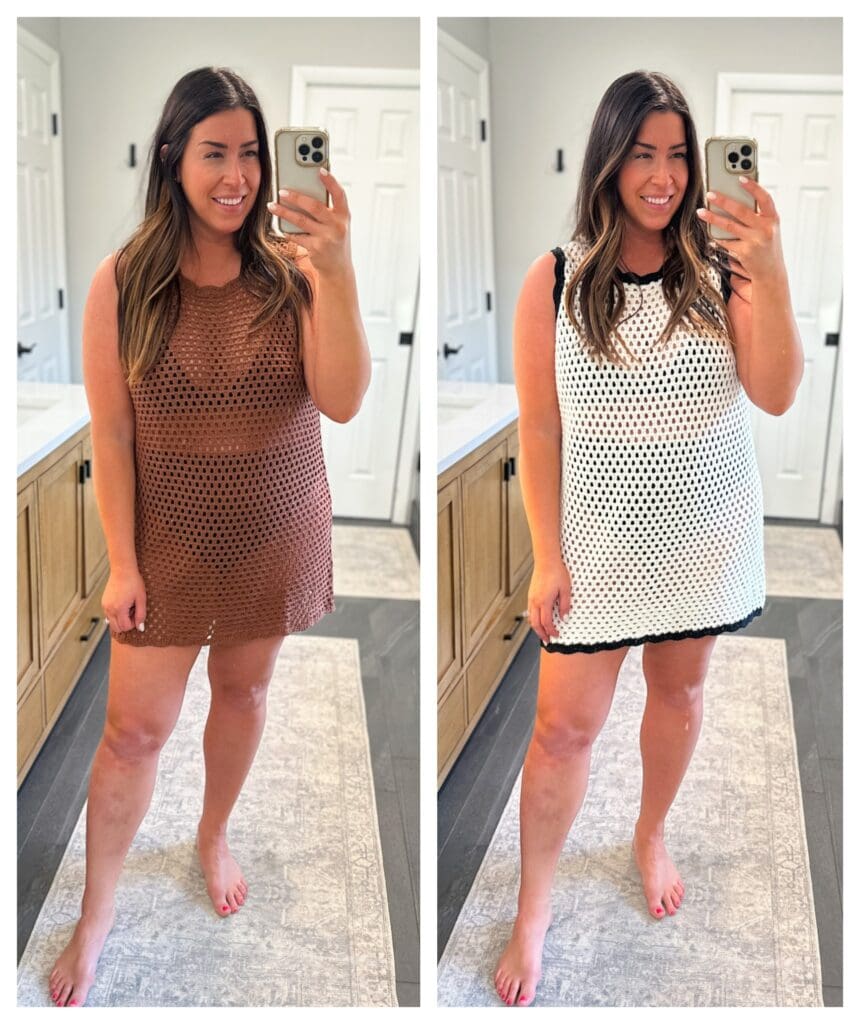
    Coverup [true to size, wearing in small]

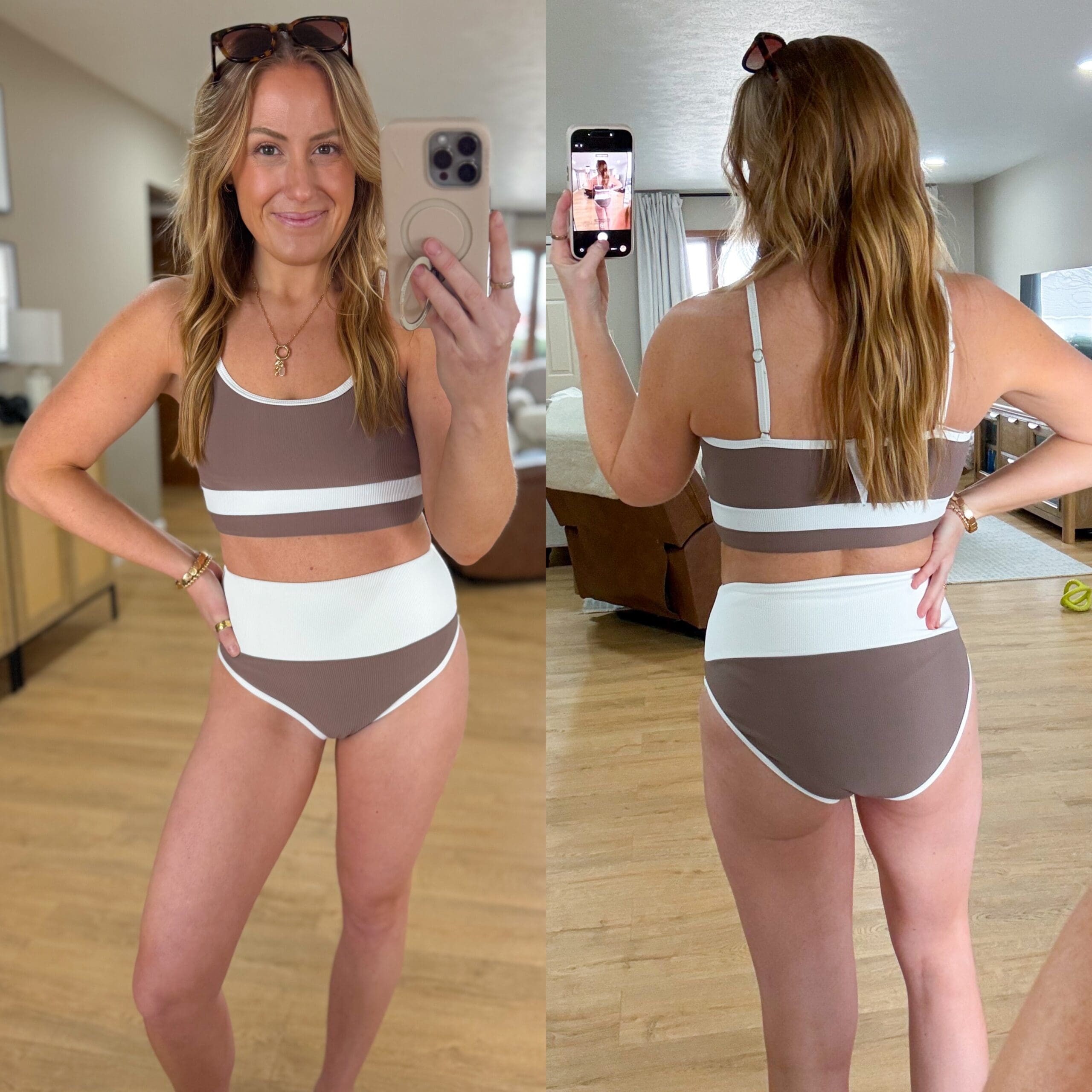
    Colorblock Swimsuit [true to size, wearing in large]

    Red Swimsuit [true to size, wearing in medium]

    Crochet Palm Sweater [true to size, wearing in medium] // Colorblock Swimsuit [true to size, wearing in large]

    Green Two-Piece Bikini [True to size, wearing in large!

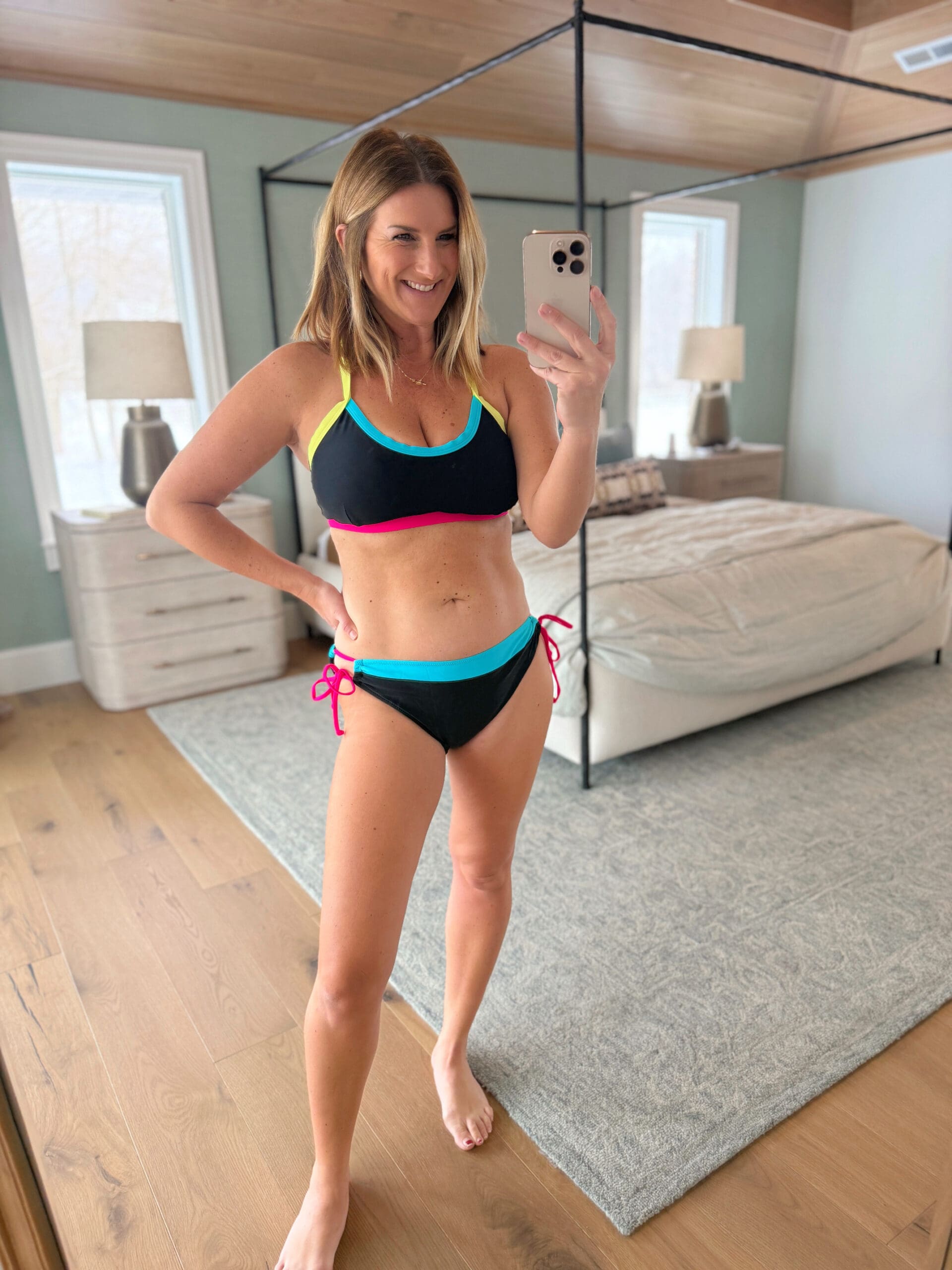
    Black Color Pop Two-Piece Bikini [true to size, wearing in large!]

    Brown Tropical One-Piece Swimsuit [True to size, wearing in large]

    Flower Coverup [oversized, wearing in small]

    Hot Pink Swimsuit [true to size, wearing in large]

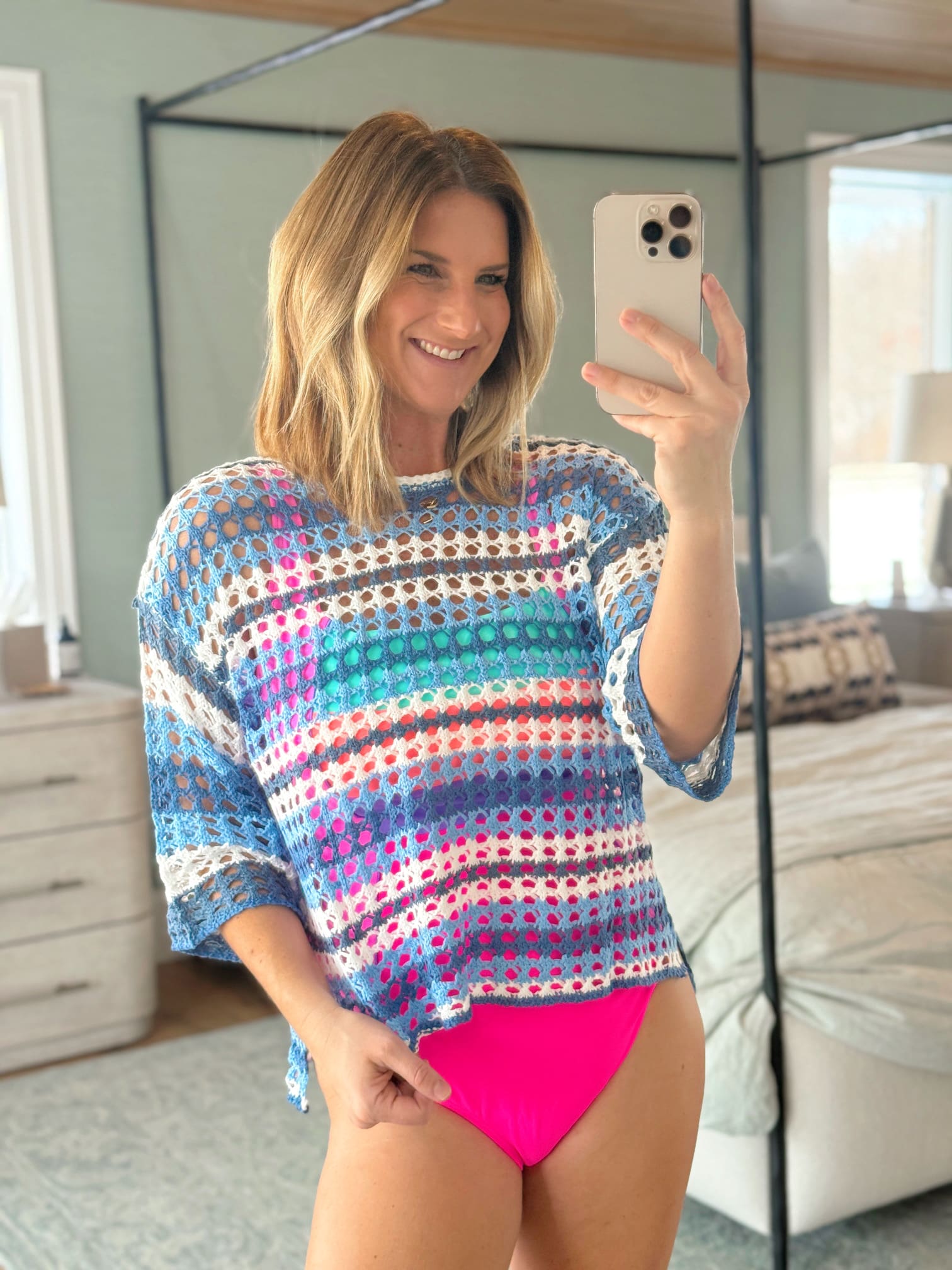
    Blue Crochet Top [true to size, wearing in small] // Colorblock Swimsuit [true to size, wearing in large]

    Colorblock Swimsuit [True to size, wearing in L]

    Green Color Block Swimsuit [true to size, wearing in large]

    Pink Color Block Swimsuit [true to size, shown in medium]

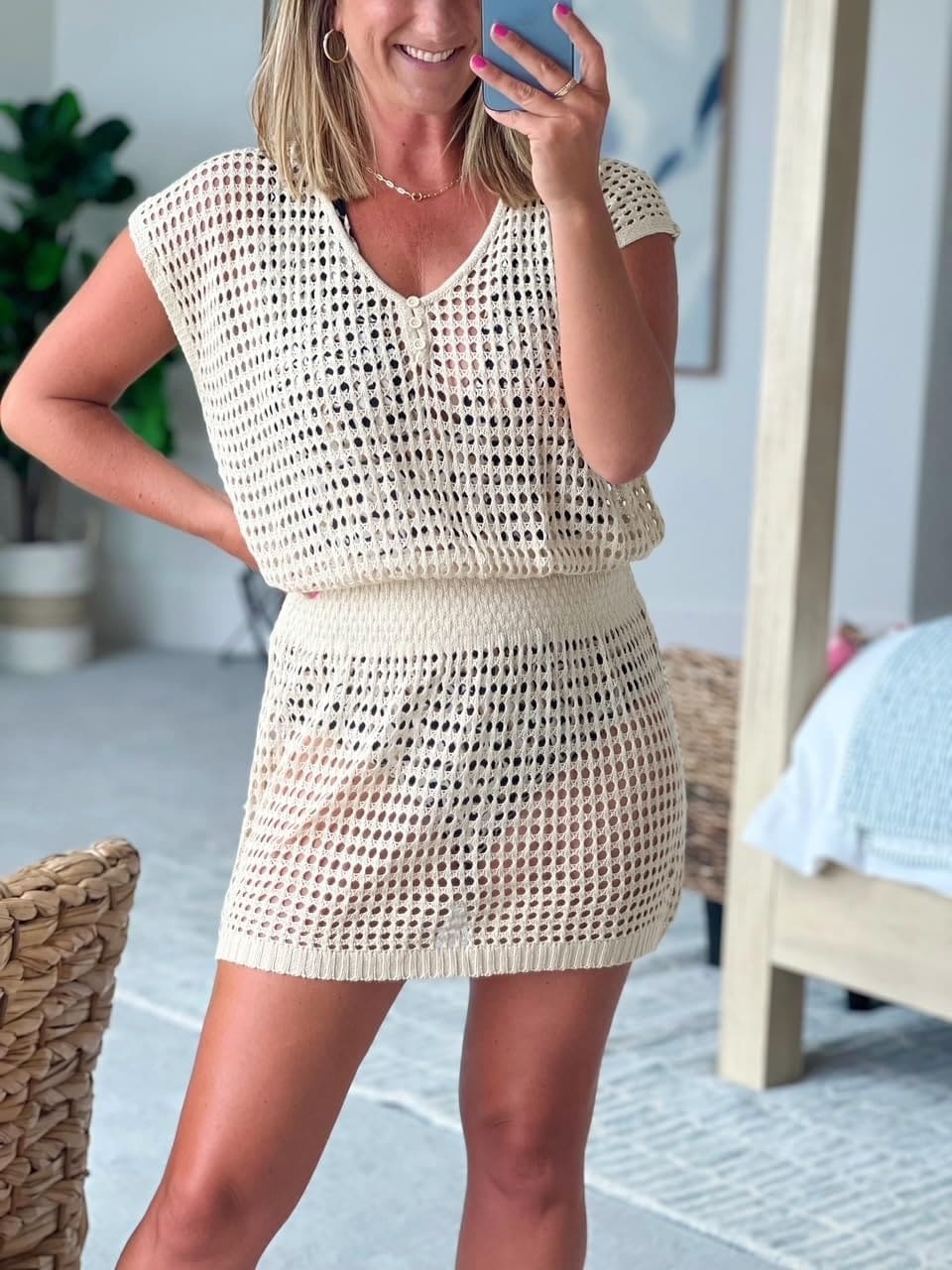
    Crochet Coverup [wearing in beige]

    Claire’s Swimsuits [5’5″ size M/L or 8/10]

    Amazon Bikini [TTS, wearing M]

    Amazon Bikini [TTS, wearing M]

    Amazon Bikini [TTS, wearing M]

    Jen’s Swimsuits [5’7″ size M or 6]

    Holipick One Shoulder One Piece Swimsuit [true to size, wearing M in dark green]

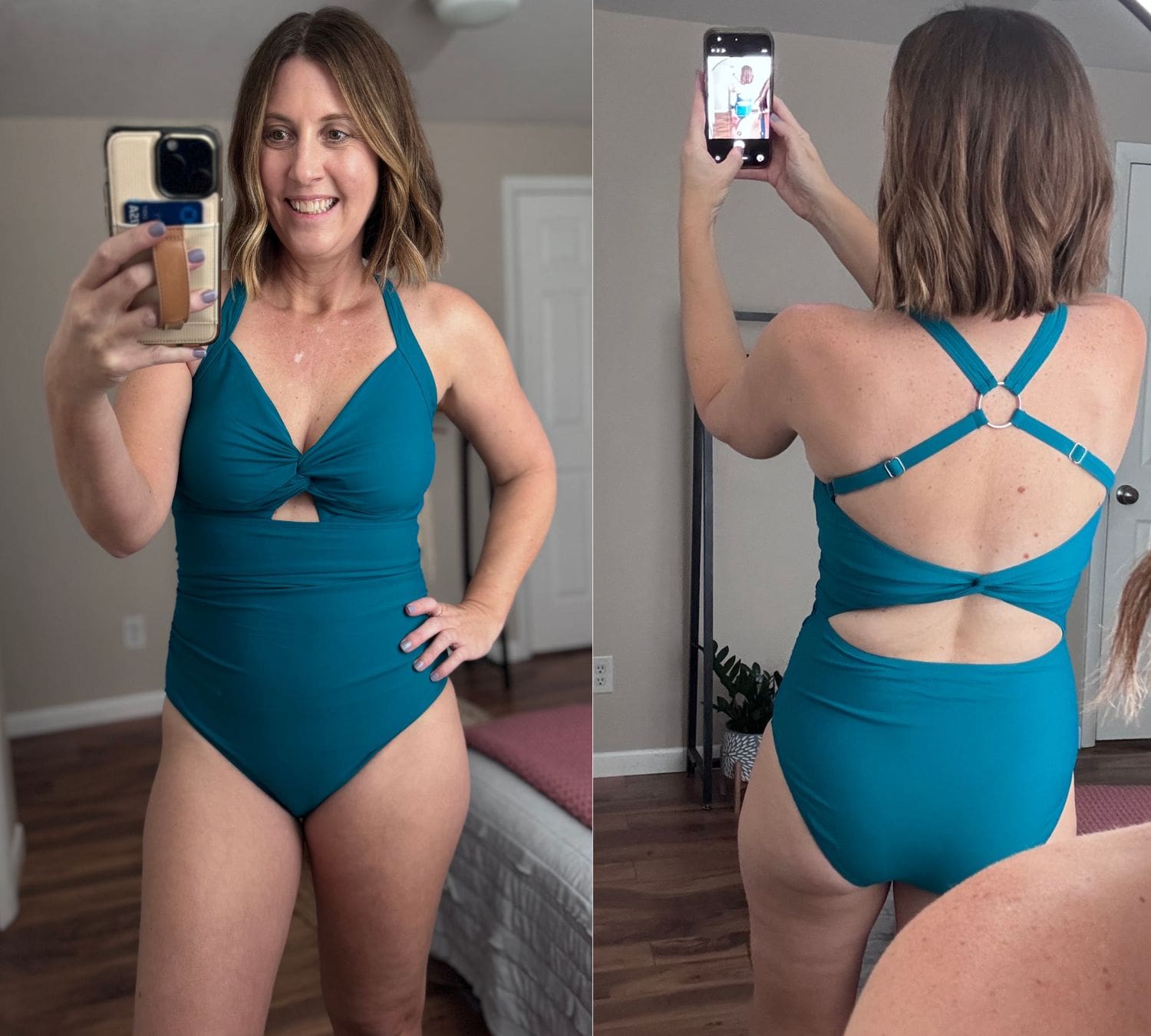
    OQQ Women’s One Piece Swimsuit Tummy Control [true to size, wearing M in lake blue]

    Devon’s Swimsuit [5’8″ size S or 2]

    CUPSHE Swimsuit [true to size, wearing small]

    Katy’s Swimsuits [5’4″, XS/S or 2]

    Amazon High Waisted Bikini [size up if in between, wearing S, Bright Blue] // Woven Tote Bag

    Swimsuit [size up if in between] // Sunglasses

    Lauren’s Swimsuit [5’6″ size L or 8/10]

    Swimsuit [true to size, wearing in large ] // Coverup

    Black Swimsuit [true to size, wearing in large] // White Beach Shorts [true to size, wearing in large] // Sandals [true to size]

    Coverup [true to size, wearing in large]

  • FRIQTAO’S “LIFESTREAM 2”,  THE INTERNET’S FAVORITE PIANIST IS JUST GETTING STARTED

    FRIQTAO’S “LIFESTREAM 2”, THE INTERNET’S FAVORITE PIANIST IS JUST GETTING STARTED


    friqtao was born in Paris and is now based in the UK, and the distance between those two places is audible in everything he makes. His entry into piano wasn’t exactly conventional. He ditched his guitar practice sessions to explore what else his music school had to offer, eventually landing on an instrument that would define him. The real turning point came during a year abroad in Paris, where he started playing the public pianos scattered across train stations and filming it. No stage, no setup, just him and whatever crowd happened to walk by.

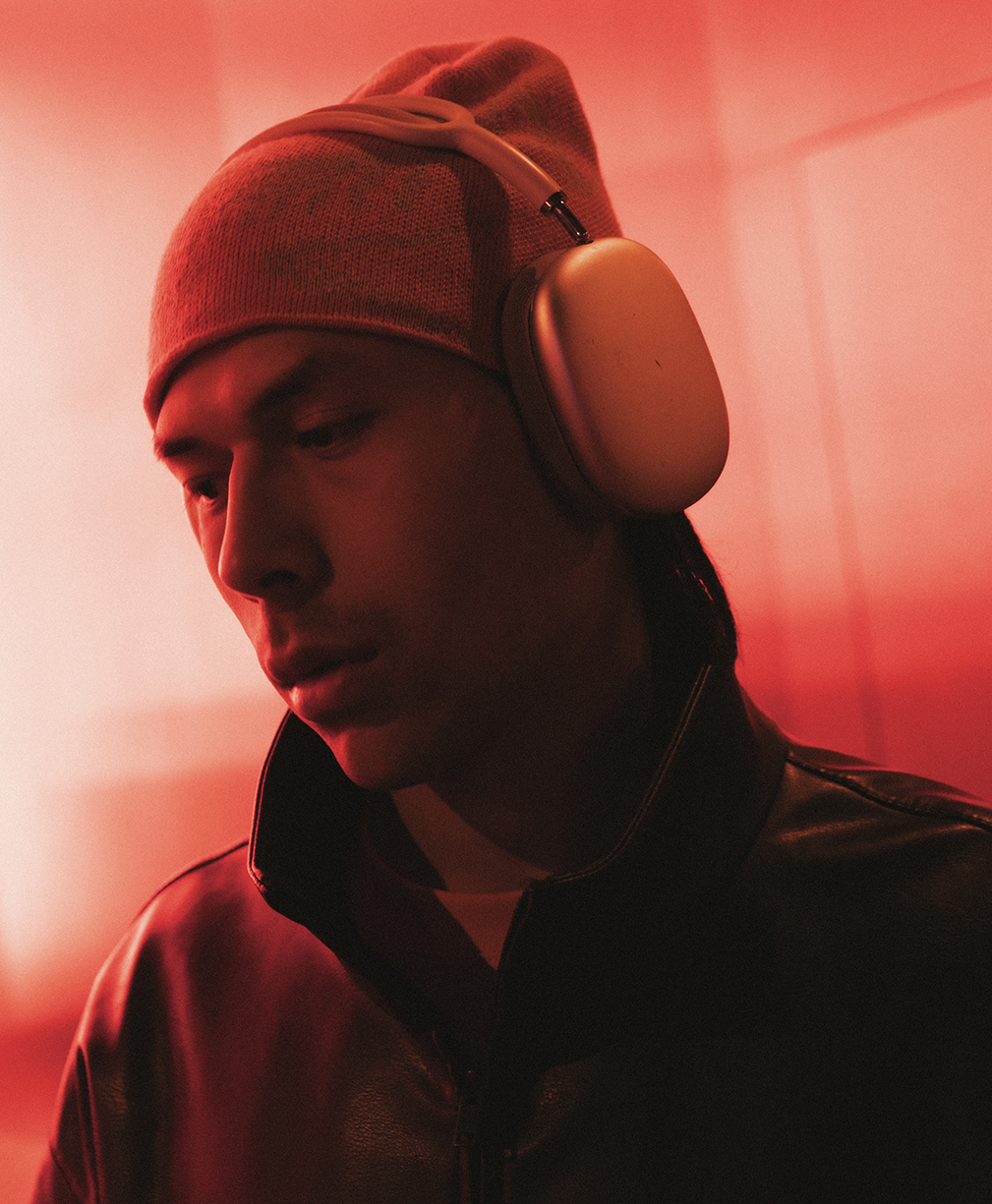
    Those videos caught on. A 2022 cover of Harry Styles’ “As It Was” was the spark. Daily uploads followed, and so did 3.7 million TikTok followers. The beanie and headphones became shorthand for a specific kind of intimacy. Pop and hip-hop filtered through piano, made to feel like something personal rather than a performance. His references run wide, from Michael Jackson soundtracking his childhood home to later obsessions with Avicii and XXXTENTACION, influences that don’t obviously belong together but somehow do in his hands.

    He previously released “Lifestream,” his debut EP, which was warmly received and helped expand his audience even further. Another major milestone came when he was selected for Amazon Music’s 2026 Artist to Watch list, a recognition that placed him firmly on the radar of a wider global audience.
    Building on that momentum, he now returns with “Lifestream 2,” a natural continuation of his earlier work.

    “Lifestream 2” opens with “Raindrops,” whose gentle melody offers a warm and memorable introduction to the project. Next comes “Glitches,” a piece that leans more toward classical sensibilities, letting emotion unfold through its carefully shaped phrases.

    “Congratulations” carries a subtle melancholic tone, though it never slips into sadness, giving the piece a reflective yet uplifting character. “SOS” begins with a siren-like sound before the piano enters, driving the track forward with urgency and speed. Finally, “fristyle” closes the EP with a powerful and introspective ending,  leaving listeners with a lingering sense of reflection.
    To celebrate the release of “Lifestream 2,” friqtao is currently touring the UK and Europe, bringing his new piano compositions to intimate stages across the continent. The run opened March 10 at The Jazz Cafe in London and continues with stops at POP UP! in Paris, Tolhuistuin in Amsterdam, Théâtre du Villars Palace in Ollon, Quasimodo in Berlin, and Ideal Bar in Copenhagen. The shows reflect friqtao’s shift from viral online performances to a growing presence on live stages. Tickets for the remaining dates are available here.

    photos / Jesse Koch

    CONNECT WITH FRIQTAO

    INSTAGRAM


    The post FRIQTAO’S “LIFESTREAM 2”, THE INTERNET’S FAVORITE PIANIST IS JUST GETTING STARTED appeared first on LADYGUNN.

  • How to Get Ketchup Out of Clothes (What Actually Works)

    How to Get Ketchup Out of Clothes (What Actually Works)

    Learning how to get ketchup out of clothes is one of those skills you pick up the hard way, usually at a summer barbecue, usually on something you care about, always at the worst possible moment.

    Mine was a July Fourth burger. One squeeze too many, a broken bottle seal, and suddenly my white Oxford had a bright red stripe across the chest. I grabbed a napkin and rubbed. That was mistake number one.

    Here’s the thing about ketchup stains that most guides don’t bother to explain: ketchup isn’t just watery tomato sauce. It behaves differently on fabric, sets faster, and has one component that most tomato-based stains don’t have. If you treat it the same way you’d treat marinara, you’ll get worse results. I know because I tested both, deliberately, on the same fabrics, side by side.

    I ran the same systematic testing I used for tomato sauce and red wine: stained fresh shirts, let some dry, put some through the dryer, tested every method I could find, and ranked them honestly.

    Here’s what I learned.

    Quick Answer: How to Get Ketchup Out of Clothes: Scrape off the excess. Don’t rub. Flush cold water through the back of the fabric immediately. Apply dish soap directly to the stain and work it in gently for two minutes. Soak in a white vinegar and cold water solution for 20 to 30 minutes. For white fabrics, follow with hydrogen peroxide and dish soap. Launder in cold water. Never put it in the dryer until the stain is completely gone. Ketchup’s sugar content means heat sets it fast and hard.

    Why Ketchup Stains Differently Than Tomato Sauce

    Most people assume ketchup and tomato sauce are essentially the same stain. They share the same lycopene pigment, the same red color, the same basic tomato base. But ketchup has two ingredients that change how it behaves on fabric, and understanding them changes how you treat it.

    Sugar: Ketchup contains significantly more sugar than tomato sauce. Most commercial ketchups are around 25% sugar by weight. A single tablespoon of Heinz contains 4 grams of sugar, which adds up quickly when a real spill hits fabric. Sugar is hygroscopic, meaning it pulls moisture from the air and bonds tightly with fabric fibers. More critically, sugar caramelizes when exposed to heat, which means a ketchup stain that goes through a warm or hot wash, or any time in the dryer before it’s fully removed, can turn brown and bond to fabric at a molecular level. This is why speed matters more with ketchup than almost any other condiment stain.

    Vinegar: Ketchup already contains acetic acid, the same compound as white vinegar. This slightly aids the breakdown of the lycopene pigment, but it also means the stain’s pH is already working against you, accelerating how quickly the pigment cures into natural fibers like cotton and linen.

    Lycopene (the red pigment): Shared with tomato sauce. Fat-soluble, water-resistant, requires a surfactant like dish soap or an oxidizer like hydrogen peroxide to break the bond with fabric fibers. The same orange ghost stain you see after washing tomato sauce is the same residual lycopene you’ll get with ketchup if you don’t treat it properly.

    According to the American Cleaning Institute, ketchup and tomato-based stains should be treated by running cold water through the back of the stain as quickly as possible to force it back out through the fabric, not from the front, which drives it deeper. Understanding the sugar and lycopene chemistry is what makes that advice make sense.

    The practical upshot: ketchup needs faster action and is less forgiving of heat than tomato sauce. Everything else carries over directly: the scrape-first rule, the cold water flush, the method hierarchy.

    Scrape First: The Golden Rule for Every Ketchup Stain

    This is where most people go wrong. Ketchup lands on your shirt and the instinct is to grab whatever’s nearby and wipe. Don’t. Wiping spreads the stain sideways and pushes it deeper into the fabric weave, turning a manageable spot into a much larger problem.

    Instead, scrape. Use a spoon, the dull edge of a butter knife, or the edge of a credit card. Lift the ketchup off the surface rather than pressing it in. Work from the outside edge of the stain toward the center so you’re not pushing it outward as you go.

    Then run cold water through the back of the stain, not the front. Pushing water from behind forces the ketchup back out through the fibers the same way it entered. This is the single most effective physical step you can take before applying any treatment.

    My time test: I stained five shirts and treated them at 2 minutes, 10 minutes, 30 minutes, 2 hours, and 6 hours. The 2-minute shirt came out completely clean with dish soap alone. The 6-hour shirt still had a faint pink-orange tinge after three full treatment cycles. With ketchup specifically, every minute counts more than with tomato sauce because of that sugar content.

    How to Get Ketchup Out of Clothes: 5 Methods Tested and Ranked

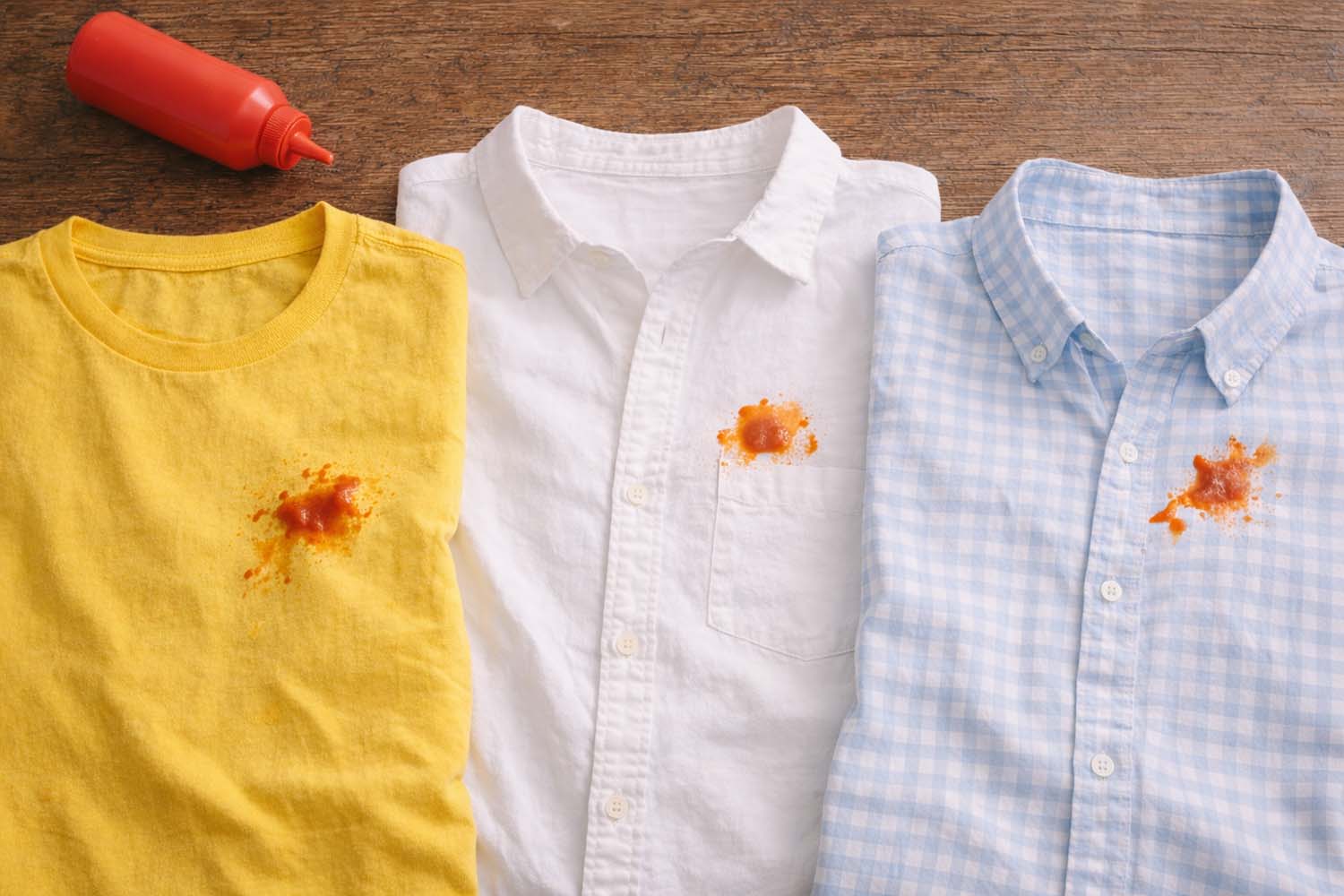
    Three shirts with ketchup stains are laid flat side-by-side on a rustic wooden surface. From left to right: a yellow T-shirt with a small ketchup splatter on the lower chest area, a white button-down shirt with a round ketchup spot near the upper chest pocket area, and a light blue gingham button-down shirt with a smaller irregular ketchup stain near the right side of the chest. In the upper left corner of the scene sits a red plastic squeeze bottle of ketchup lying on its side. The stains appear like small accidental squirts similar to what might happen while adding ketchup to a burger.Three shirts with ketchup stains are laid flat side-by-side on a rustic wooden surface. From left to right: a yellow T-shirt with a small ketchup splatter on the lower chest area, a white button-down shirt with a round ketchup spot near the upper chest pocket area, and a light blue gingham button-down shirt with a smaller irregular ketchup stain near the right side of the chest. In the upper left corner of the scene sits a red plastic squeeze bottle of ketchup lying on its side. The stains appear like small accidental squirts similar to what might happen while adding ketchup to a burger.

    1

    Method 1: Cold Water Alone (Not Enough)

    Rinsing a ketchup stain with cold water as fast as possible is the right instinct, but cold water alone isn’t a treatment. It’s triage. Water can’t break the bond between lycopene and fabric fibers. It has no surfactant to cut the fat-soluble pigment and no oxidizing power to break it down.

    I flushed cold water through the back of a fresh stain for a full two minutes. It lightened the stain noticeably and removed some of the surface ketchup, but left a clear pink mark behind.

    My results: About 30% improvement on a very fresh stain, purely from removing the surface layer. The residual lycopene was entirely untouched.

    Verdict: Do this first, always. Follow immediately with dish soap. Water alone isn’t a treatment. It’s a head start.

    2

    Method 2: Dish Soap and Cold Water (The Baseline)

    Dish soap is a surfactant and a degreaser. It’s designed to break apart fat and oil molecules (exactly what lycopene is) and suspend them in water so they can be rinsed away. Blue Dawn is my go-to because its surfactant concentration is higher than most dish soaps, which matters when you’re trying to break down a fat-soluble pigment.

    Apply blue Dawn directly to the stain, no dilution. Work it in gently with your fingertips in a circular motion for about two minutes. Let it sit for five minutes, then rinse from the back with cold water.

    My results: Solid improvement over water alone. About 60% of the fresh stain lifted. The stain looked significantly lighter but still had a visible pink tinge. Better than tomato sauce results with the same method, likely because ketchup contains less oil.

    Verdict: Always your first treatment step, but not sufficient on its own for most stains. Move to Method 3 or 4 immediately after.

    3

    Method 3: White Vinegar Soak (Best for Colors)

    After the dish soap pre-treatment, mix one part white vinegar with two parts cold water and soak the stained area for 20 to 30 minutes. Then launder as normal in cold water.

    White vinegar’s acidity helps break the bond between lycopene and fabric fibers. With ketchup specifically, the vinegar in the stain itself has already started this process to a small degree. Adding a vinegar soak continues that work and loosens the remaining pigment without the bleaching risk of hydrogen peroxide.

    My results: The best single-treatment result I got for colored fabrics. About 85% of a fresh ketchup stain lifted after the dish soap and vinegar combination. Better results than the same method on tomato sauce, which I attribute to the lower oil content in ketchup. The stain was barely visible and entirely gone after laundering.

    Verdict: The go-to for colored fabrics. Easier and more effective on ketchup than on tomato sauce. If the stain is fresh and you act quickly, dish soap plus vinegar soak is often all you need.

    4

    Method 4: OxiClean or Enzyme Stain Remover (Best for Stubborn or Older Stains)

    Oxygen-based cleaners like OxiClean release oxygen ions that break apart the chemical bonds holding the stain to fabric. Enzyme-based removers (Spray ‘n Wash, Zout) target the organic compounds in the ketchup directly. Both handle the layered nature of ketchup (lycopene plus sugar) better than vinegar alone on older or more stubborn stains.

    For OxiClean: mix one scoop with warm water per package directions, submerge the stained area, and soak for one to four hours. For enzyme sprays, apply directly, work it in, and let sit at least 15 minutes before washing.

    Note: OxiClean isn’t safe for silk or wool. For those fabrics, skip to the fabric section below.

    My results: Excellent on stains that had been sitting one to three hours. A two-hour-old ketchup stain on a colored cotton shirt came out essentially clean after a two-hour OxiClean soak. The enzyme spray was equally effective on fresh stains and easier to use on the go.

    Verdict: Reach for this when the vinegar soak isn’t enough, or when the stain has been sitting longer than 30 minutes on colored fabric. Worth keeping in your laundry kit specifically for this scenario.

    ⚠ Important: Don’t Mix OxiClean and VinegarIf you’re using OxiClean, don’t use white vinegar in the same treatment session. OxiClean breaks down into hydrogen peroxide on contact with water. Combining hydrogen peroxide with vinegar creates peracetic acid, which can irritate skin and eyes and may damage fabric fibers. Use one or the other per session. If you want to try vinegar after an OxiClean soak, rinse the garment completely first, launder, and treat with vinegar only if the stain persists in a separate session.

    5

    Method 5: Hydrogen Peroxide and Dish Soap (The Winner, White Fabrics Only)

    The same combination that won my tomato sauce testing wins here too. Hydrogen peroxide is a mild oxidizer that breaks down lycopene at the molecular level, while dish soap handles any remaining oil and sugar residue simultaneously.

    Important: Only use this on white or very light-colored fabrics. Hydrogen peroxide has a bleaching effect and will permanently lighten or spot colored clothing.

    Here’s exactly how I do it:

    1. Mix 3 parts hydrogen peroxide (standard 3% drugstore grade) to 1 part blue Dawn dish soap.
    2. Pour the mixture directly onto the stain, fully saturating it.
    3. Let it sit for 20 to 30 minutes. You’ll often see the stain begin to lighten within the first few minutes.
    4. Rinse thoroughly with cold water from the back of the stain.
    5. Check before washing. If still visible, apply once more.
    6. Launder in cold water and air dry. Never put it in the dryer until the stain is gone.

    My results: The fresh stain was completely undetectable after one treatment. A shirt with a two-hour-old stain came out clean after two applications. Even a stain that had dried completely on white cotton came out after the hydrogen peroxide treatment followed by an extended soak.

    Verdict: The most powerful option for white fabrics. Cheap, uses stuff already under your sink, and genuinely impressive results on a stain that most people assume is permanent.

    Pro Tip for Tough Stains: For particularly stubborn stains on white fabrics, oxygen bleach powder added to a soak can break through what the hydrogen peroxide treatment loosened. And an enzyme-based stain remover applied before washing gives the treatment one more pass at the organic compounds in the ketchup before they hit the machine.

    How to Get Dried Ketchup Out of Clothes

    Dried ketchup is harder to remove than fresh but not impossible. The sugar content is what changes the equation. Dried ketchup has essentially become a sticky, partially caramelized film on top of the fabric, and you need to rehydrate it before any treatment will work.

    Step 1: Scrape off the dried crust carefully with a spoon or butter knife. Lift rather than press down. Dried ketchup is brittle and will flake off if you’re patient.

    Step 2: Soak the stained area in cold water for 15 to 20 minutes to rehydrate the stain fully.

    Step 3: Apply dish soap and work it in firmly. You can be more aggressive with a dried stain than a fresh one. Let it sit 10 minutes, then rinse.

    Step 4: Apply your main treatment: hydrogen peroxide and dish soap for white fabrics, or a one to three hour OxiClean soak for colors. Extend your soak time compared to a fresh stain.

    Step 5: Be prepared to repeat the full cycle two to three times. Dried ketchup rarely comes out in one pass.

    For stains that have been sitting more than a day, I’ve had the best results doing an initial dish soap pass, letting it air dry, then going back in with the hydrogen peroxide treatment on white fabrics or a longer OxiClean soak on colors. The two-pass approach consistently outperforms a single aggressive treatment on old stains.

    What If It Already Went Through the Dryer?

    This is the hardest scenario and the one most people quietly give up on. The dryer’s heat has caramelized the ketchup’s sugar content and set the lycopene pigment more deeply into the fabric. You’re dealing with a fundamentally different stain chemistry than what you started with.

    The honest truth: heat-set ketchup stains have about a 60% removal rate in my testing, lower than heat-set tomato sauce because of the sugar component. But it’s worth trying before you write the garment off.

    Step 1: Scrape off any surface residue. Apply dish soap and work it in firmly for three to five minutes, longer than you’d spend on a fresh stain.

    Step 2: Soak the entire garment in an OxiClean solution overnight, eight hours minimum. The extended soak time gives the oxygen ions maximum time to work through the set stain.

    Step 3: For white fabrics, apply the hydrogen peroxide and dish soap mixture after the soak, before washing. This second oxidation pass often breaks through what the OxiClean loosened.

    Step 4: Air dry only. Never back in the dryer until the stain is definitively gone. For heat-set stains, expect two to four treatment rounds.

    If you’re still seeing a ghost stain on white fabric after all of this, hang the damp garment in direct sunlight for two to four hours. UV light acts as a natural oxidizer and can clear residual lycopene that chemical treatments have already weakened.

    How to Get Ketchup Out of White Clothes

    White fabrics are both the easiest and the most unforgiving ketchup scenario. Easiest because you have the full arsenal available: hydrogen peroxide, extended soaks, and sunlight. Most unforgiving because any residual pink or orange tinge is immediately obvious against white.

    The hydrogen peroxide and dish soap combination (3 parts peroxide, 1 part blue Dawn) is your primary weapon. Apply it as soon as possible after the initial cold water flush and dish soap pre-treatment. If you catch the stain within two minutes, one treatment is often all you need.

    For a stain that’s been sitting longer, apply the hydrogen peroxide mixture and extend the soak to 45 minutes before rinsing and laundering. Check carefully in good light before drying, as the stain may look gone when wet but reveal a faint ghost once dry.

    For ghost stains that survive washing, hang the garment damp in direct sunlight for two to four hours. UV light acts as a natural oxidizer and is remarkably effective at breaking down residual lycopene that chemical treatments have already weakened. This is the same trick that works on tomato sauce, and it works for the same reason: lycopene is sensitive to UV oxidation. It only works while the fabric is still damp, so don’t let it dry first.

    One thing to avoid on white cotton: chlorine bleach. It can yellow white fabric over time and is far more aggressive than the stain requires. Hydrogen peroxide gets there without the risk.

    How to Remove Ketchup Stains by Fabric Type

    The method matters, but the fabric matters just as much. Here’s what I found works best per fabric:

    Cotton and cotton blends: The most forgiving. Handles hydrogen peroxide, OxiClean, and vinegar soaks equally well. Multiple treatment cycles won’t damage the fabric, so you can be persistent.

    Jeans and denim: Denim’s tight weave keeps ketchup closer to the surface than open-weave fabrics, which actually helps. Dish soap and a vinegar soak usually handles fresh stains. Avoid hot water, which fades denim unevenly on top of setting the stain.

    Linen: Linen’s open weave allows ketchup to penetrate quickly. Act immediately. Extended OxiClean soaks (three to five hours) work best for colored linen. Hydrogen peroxide and sunlight for white linen.

    Polyester and synthetics: Synthetic fibers don’t absorb liquid as readily, so ketchup tends to sit closer to the surface. Dish soap alone often handles a fresh stain on polyester. Add a vinegar soak for anything that resists.

    Silk: Avoid hydrogen peroxide entirely, as it can permanently damage silk fibers. Don’t scrub. Blot as much as possible, then take it to a dry cleaner. If treating at home: cold water with a very small amount of gentle detergent (like Woolite), soak no more than five minutes, rinse very gently.

    Wool and cashmere: Hand wash only in cold water with a specialty wool detergent. No agitation. For anything valuable, professional cleaning is the safest call. Never put wool in the dryer.

    Ketchup vs. Other Condiment Stains: What Changes

    If you’ve landed here after a broader condiment disaster, here’s how ketchup compares to its table companions. The chemistry differences are real and change what you reach for first.

    🟡 Mustard: The hardest condiment stain to remove, by a significant margin. Mustard contains turmeric, which is literally a fabric dye that has been used for centuries. Once mustard dries and sets, especially through heat, it can be near-impossible to remove completely. Treat it even faster than ketchup, and use hydrogen peroxide on white fabrics immediately. Don’t wait for the dish soap pass first.
    🟤 BBQ Sauce: Ketchup’s more complicated cousin. BBQ sauce shares the lycopene and sugar components but adds a smoke and molasses layer that makes it stickier and harder to lift. The double stain (tomato pigment plus caramelized sugars) means an enzyme cleaner or OxiClean soak is almost always necessary. Dish soap alone won’t get there.
    🔴 Hot Sauce: Easier than ketchup overall. Hot sauce is mostly capsaicin and vinegar with minimal oil and less lycopene, which means it responds well to dish soap and a vinegar soak. The main variable is artificial food coloring, which some hot sauces contain. If the sauce is an unnatural red or orange, treat it as a dye stain and reach for OxiClean.
    🍅 Tomato Sauce and Marinara: Similar chemistry to ketchup but with more oil and less sugar. Ketchup sets faster because of the sugar content, but tomato sauce is often harder to fully clear because of the higher oil layer. See our full guide to getting tomato sauce out of clothes for a complete breakdown.

    What Definitely Doesn’t Work

    Warning: Never Do These Things: According to Consumer Reports and the American Cleaning Institute, these are the most common mistakes that turn a treatable ketchup stain into a permanent one:

    • Hot water at any stage: Heat caramelizes the sugar in ketchup and sets the lycopene pigment. Cold water only, from the first rinse through the final wash.
    • Rubbing the stain: Spreads it sideways and pushes it deeper into the fiber weave. Scrape, then blot only.
    • Dryer before the stain is gone: The single most common way a treatable ketchup stain becomes a permanent one. Check in good light before drying, every time.
    • Chlorine bleach on colors: Will pull the stain and your garment’s color simultaneously. Use oxygen bleach like OxiClean instead.
    • Waiting to treat it: More so than most food stains, ketchup punishes delay. Every 15 minutes matters, especially in warm conditions where the sugar sets faster.

    My Step-by-Step Emergency Protocol

    Based on everything I tested, here’s the exact sequence I follow now. I keep a version of this taped inside my laundry room cabinet alongside the one for tomato sauce and red wine.

    Step 1: Scrape off excess ketchup with a spoon or card edge. Don’t rub. If you’re away from home, blot gently with a napkin from the outside edge inward.

    Step 2: Run cold water through the back of the stain immediately. This is the most important physical step and the one most people skip when they’re flustered.

    Step 3: Apply blue Dawn directly to the stain, work in gently with fingertips for two minutes. Rinse with cold water.

    Step 4: White fabric gets the hydrogen peroxide and dish soap mixture (3:1 ratio), left to sit 20 to 30 minutes. Colored fabric gets a white vinegar soak (one part vinegar, two parts cold water) for 20 to 30 minutes, or an OxiClean soak if the stain has been sitting longer than 30 minutes.

    Step 5: Launder in cold water with your regular detergent.

    Step 6: Check the stain in good light with the fabric stretched flat before drying. Any trace remaining? Repeat Steps 4 and 5 before it goes anywhere near the dryer.

    The Stain-Fighting Kit Worth Keeping Stocked

    The same kit I assembled after my red wine testing handles ketchup, tomato sauce, and pretty much every other food stain I’ve thrown at it. Here’s what’s in it:

    • Hydrogen peroxide (3%, standard drugstore bottle)
    • Blue Dawn dish soap (small dedicated bottle for stain use)
    • White vinegar (in a spray bottle for easy targeted application)
    • OxiClean Versatile Stain Remover (for colored fabric soaks and stubborn stains)
    • Enzyme-based stain remover spray (for on-the-go treatment and older stains)
    • Clean white cloths or old t-shirt scraps for blotting
    • A dull-edged spatula or old credit card for scraping

    Total cost: under $20. If you’re looking to expand your cleaning approach with natural, non-toxic solutions around the home, this kit doubles as a starting point for that too.

    Frequently Asked Questions

    Does ketchup stain permanently?
    Not if you treat it quickly. Fresh ketchup stains caught within the first few minutes are very removable. The risk of permanence increases significantly with time, heat, and especially if the garment goes through the dryer before the stain is fully gone. Ketchup’s sugar content makes it more heat-sensitive than most food stains, so the dryer warning is especially important here.

    Can I get ketchup out after it’s dried?
    Yes, often. Rehydrate the dried stain with a cold water soak for 15 to 20 minutes before applying any treatment. Don’t try to apply soap or vinegar to a completely dry, crusted stain. It won’t penetrate properly. Once rehydrated, follow the dried stain protocol above. Expect two to three treatment rounds.

    Why does ketchup leave an orange stain after washing?
    That orange residue is lycopene, the fat-soluble pigment that gives ketchup its red color. Regular washing won’t remove it because laundry detergent alone can’t break down a fat-soluble compound bonded to fabric fibers. You need an oxidizer to target the lycopene specifically: hydrogen peroxide for white fabrics, OxiClean or an enzyme remover for colors.

    Is it safe to use hydrogen peroxide on colored clothes?
    No. Hydrogen peroxide has a bleaching effect and will permanently lighten or spot colored fabrics. For anything that isn’t white or near-white, use the white vinegar soak or an OxiClean soak instead. If you’re unsure whether a fabric is colorfast, test a hidden area first.

    Does the treatment change for different types of ketchup?
    Slightly. Low-sugar or no-sugar ketchups set a little more slowly, so you have a slightly larger time window. Organic ketchups without added vinegar may respond even better to the vinegar soak since there’s less acid already in the stain. Spicy or flavored ketchups sometimes contain oil-based additives, in which case a more aggressive dish soap pre-treatment is worth the extra minute.

    What about ketchup on jeans or dark clothes?
    Dark clothes are actually somewhat forgiving because the stain is less visible. Treat with dish soap first, then a white vinegar soak. Avoid hydrogen peroxide entirely. OxiClean is labeled as color-safe but test a hidden seam first on dark fabrics. The main risk with dark clothing is that repeated soaking can slightly fade the fabric over time. Act fast so you need fewer treatment rounds.

    Final Thoughts

    Ketchup stains feel urgent because they are urgent. The sugar content means the window between “easily treatable” and “this is going to take real effort” is shorter than with most food stains. But the chemistry isn’t complicated once you understand it, and the treatment sequence is straightforward.

    Scrape first. Cold water always. Dish soap for the surface, vinegar or OxiClean for colors, hydrogen peroxide for whites. Check before you dry. That sequence handles the overwhelming majority of ketchup stains completely.

    The bigger lesson from testing: the method matters less than the timing. I got better results treating a five-minute-old stain with dish soap alone than I did treating a two-hour-old stain with hydrogen peroxide. Act fast and you’ll almost never lose a shirt to ketchup.

    Keep that kit stocked. It takes five minutes to put together and has already saved more shirts in my house than I’d like to admit.

    Have a method that worked, or a stain that beat everything you tried? Drop it in the comments. I’m always looking to update these guides.

    The post How to Get Ketchup Out of Clothes (What Actually Works) appeared first on Better Living.

  • CHARLOTTE SANDS ON “SATELLITE”: SELF-TRUST, EXPERIMENTATION, AND A NEW CHAPTER

    CHARLOTTE SANDS ON “SATELLITE”: SELF-TRUST, EXPERIMENTATION, AND A NEW CHAPTER


    story / Jesse Roth

    photos/ Juan Flores


    Charlotte Sands is striking. The electric blue hair might be the first thing you notice, but it is the way she speaks, thoughtful, self-aware, and completely unfiltered, that keeps you hanging on every word. Originally from Nashville, Sands has built her career in the world of alternative rock while never quite fitting neatly into one box, something that feels reflected in both her music and her personality. As someone who occasionally dyes the tips of my hair bright colors for a month each summer before inevitably chopping it back into a blunt bob, I went into our conversation already a little enamored with how effortlessly cool she seems. Any intimidation quickly disappeared once we started talking, beginning with a shared appreciation for the oddly quaint suburban pockets of Los Angeles’ San Fernando Valley. Charlotte laughed, admitting, “I never thought I’d be a suburbs girl.”

    That mix of confidence and self-reflection runs through Satellite her new album, which finds the Nashville-born artist expanding both sonically and emotionally. Written after years of constant touring and the release of her first full-length album “can we start over?”, “Satellite” captures a different chapter for Sands: one defined by stability, experimentation, and a growing trust in her own instincts. When we spoke, we covered everything from meticulous promotion strategies and genre fluidity to Pinterest vision boards and the quiet confidence that comes with finally creating music on your own terms. 

    Would you say you’re more Type A or Type B when it comes to promoting your album?

    I think I’ve definitely become more Type A over the last few years. I genuinely don’t think I was ever like that before, but it became necessary in my career to learn those skills. Now I love a strategy. I love an Excel sheet. If I could have a slideshow or a Venn diagram of every possible thing, that’s heaven to me. I have pretty intense ADHD, and sometimes the only way I can function is by being overly organized. Everything is like a yarn map in my head. There’s a switch between my creative brain and my business brain, and I’ve learned how to use both.

    You wrote “Satellite” after putting out your first full-length album and doing a lot of touring. How much of the aftermath of that period made its way into the process of making this album?

    It was interesting because it was the first time I had ever taken real time off from touring. While writing this album, I was actually stable in my normal life and not traveling constantly. I was in a consistent environment, which I had never really had in the last five years.

    I also had to learn a new skill. When you’re used to being busy and overstimulated all the time, your body almost stays in reaction mode. You’re constantly thinking, “What’s today going to bring?” Sometimes it’s easier to create from that state of panic than from peace and calm. I had to relearn how to be a writer and figure out how to find inspiration without the chaos. I think it’s just part of getting older.

    Your last album title was a question — “can we start over?” — whereas “Satellite” feels very strong and declarative. What’s something you used to question that now you feel more solid about?

    During the last project and that phase of my life, I felt like I constantly had to prove myself. As a woman in rock music especially, people are always looking for ways to discredit you — your skills, your work, even your character.

    I felt like I needed to prove that I deserved to be here, that I could actually sing, that people should take me seriously. I was always thinking about whether other people would like something or respect it.

    Now I feel much more confident experimenting and making different choices. Ironically, I feel more comfortable collaborating with different people and trying different genres because I’m not constantly worried about proving myself anymore.

    I remind myself that I can’t create something meaningful for other people unless I’m doing right by myself first. The best music comes from giving myself the freedom to trust my instincts. I owe that to the fans who have been here since day one — the people buying the tickets and the merch. The best way I can give back to them is by making the best music I possibly can, and that only happens when I stop listening to everyone else all the time.

    Fluidity of genre is something that consistently appears in your work. Is that something you’re consciously thinking about when you’re making music? For example, did you go into “HUSH” thinking, “I’m going to make a dance song”?

    That song is actually funny because I fully wrote it thinking it would be a pitch song. We had been writing heavier, more emotional songs for the album and I was honestly burnt out from digging so deep into myself.

    So I said, “Let’s just write something fun. I have this random chorus and it would be fun to write a dance song.” Immediately the guys I was working with were like, “You have to cut this. It’s so catchy.”

    But I couldn’t see it at first. I genuinely thought I would never put it out because it didn’t feel like it made sense for me. Then my producer Keith, who worked on most of the album, recorded live drums over the track and sent it back to me. The second I heard it I knew exactly what the song should be.

    Sometimes in a session you know immediately what a song is going to be. Other times you have to sit with it. A lot of the time I’m also thinking about the live show. Where does this song fit in the set? What energy does the show need in that moment? Will I feel excited when I hear the cue for that song in my in-ears? Thinking about the live experience really helps guide the production and the energy of the songs.

    Your songs move between confident, almost audacious moments and darker, more vulnerable ones. Which lane are you more comfortable writing in?

    Honestly, it’s much easier for me to write sad or emotional songs. This is actually the first album where I feel like there are multiple happy songs.

    When I’m writing in my journal, it’s usually about the things I don’t want to carry around inside my body anymore. Writing a song about those feelings lets me create a place for them to live outside of myself. That feels very natural.

    Trying to explain happiness can be harder. Sometimes those feelings feel more private, like something I want to hold onto instead of dissecting.

    With this album, though, I wanted it to feel like the full human experience. I wanted every emotion to exist somewhere in the project so that hopefully everyone can find at least one song that speaks to them on any given day.

    Which song came together the fastest?

    Probably “Sunday.” That was another moment where we just completely let go in the session. I knew I wanted an acoustic song, and I had been listening to artists like Sheryl Crow, Michelle Branch, Bonnie Raitt, and Dido.

    We started playing around with some guitar chords, and I went into the vocal booth and basically made up sounds and phrases on the spot. Most of the lyrics came from those first takes. We kept them because the whole point of the song was capturing a feeling instead of overanalyzing it. It was very low pressure. It felt like the first thing we said was the right thing.

    Which song required the most care to get right?

    Water Me Down.” That was one I felt like I had to be very careful with because I wanted it to be accurate to my experiences. It’s something I’ve wanted to write about for a long time.

    I think a lot of women can relate to being in relationships where someone slowly tries to make you smaller. You see it happen with friends, you see it happen to yourself, and it’s strange how the things people first love about you can eventually become the things they resent.

    It’s a complicated emotion, but I felt like if I didn’t include that song I would be doing a disservice to people who might hear it and recognize that experience in themselves. I’m really glad it ended up on the album.

    How do you choose which songs to release as singles?

    I try to choose songs that represent different sides of the album. “Push” shows the more electronic pop side. “Afterlife” leans into the acoustic, songwriter part of me, which is the kind of music I grew up listening to.

    Even when I’m writing rock music, I never feel like I’m only one thing. I’m always both of those sides at once.

    Then there’s “Neck Deep,” which has the heavier rock elements mixed with electronics. I wanted the singles to give people a small preview of all the different directions the album goes in.

    I know you’re a Pinterest person, and so am I. What did the vision board for this album look like?

    This process was really different from the first album. With that record, everything fell into place immediately. We wrote the first five singles in five days. I had been waiting so long to make my first album that everything just felt obvious.

    This time it was much harder. I had all the music finished but couldn’t settle on visuals or artwork. Every song felt like it lived in a completely different universe.

    Eventually I thought maybe I should start at the end of the process instead of the beginning. So I went to the place where we normally customize vinyl and started looking at colors. I found this dark olive green vinyl with black in it and immediately thought, “That’s the album.”

    Green is grounding for me and it’s also my favorite color. From there I worked backwards, connecting visuals and references for each song like one of those detective boards with string connecting everything.

    It was a really valuable lesson. Just because you feel stuck doesn’t mean you are. Sometimes you just have to find a different pathway to your creativity.

    When during this process did you move from Nashville to Los Angeles?

    That was in 2024. At the end of that year we had written a few songs, including “Satellite,” which always ends up becoming the title track somehow.

    I went back to Nashville for a while and felt really stuck creatively. I was doing the same things every day and going to the same places every weekend. I realized I didn’t feel inspired there anymore.

    So I moved to LA because I needed to be somewhere that felt constantly changing. I’m so used to touring and meeting new people and having new conversations every day. I thrive on that energy.

    It was also a challenge to myself — starting over in a new city, building a new friend group, turning my relationship into long distance by choice. I wanted to take a risk on myself while I still felt hungry in my career.

    That experience gave me a lot of confidence while making the album. I felt proud of myself for making that leap, and it pushed me to create exactly what I wanted.

    What do you hope listeners take away after hearing “Satellite” for the first time?

    I hope people realize that human beings have so much depth and that we’re never just one feeling. Even when you feel stuck in something, there are always other parts of you existing at the same time.

    Feeling deeply is a superpower. Feeling empathy for other people is a superpower.

    If someone listens to the album and realizes they can experience all these emotions and still end up somewhere peaceful — like the feeling at the end of “Sunday” — that would mean a lot to me.

    More than anything, I hope listeners feel like they have a friend in the music. Even if they don’t know me personally, maybe the songs help them put words to something they’ve felt before. We’re all trying to figure life out, making mistakes and getting better along the way. Even when we feel far apart from each other, we’re still orbiting in the same space. That’s the whole idea behind “Satellite.”

    Talking with Charlotte Sands made it clear that “Satellite” represents more than just a new collection of songs. It reflects an artist learning how to balance ambition with self-trust, structure with instinct, and vulnerability with confidence. Sands approaches her work with both the meticulous organization of someone who loves a spreadsheet and the emotional openness of someone unafraid to write about the messy, complicated parts of being human. That duality runs throughout “Satellite,” an album that moves between cathartic rock, glossy pop moments, and softer reflections without ever losing its center. If Sands’ goal was to capture the full spectrum of feeling and remind listeners that we are all navigating life’s orbit together, “Satellite” succeeds beautifully.

    CONNECT WITH CHARLOTTE SANDS

    INSTAGRAM


    The post CHARLOTTE SANDS ON “SATELLITE”: SELF-TRUST, EXPERIMENTATION, AND A NEW CHAPTER appeared first on LADYGUNN.

  • Proof of Brotherhood

    By any football metric, Mike and Maurkice Pouncey have already secured their place in history: national champions at the University of Florida, first-round NFL draft picks, perennial Pro Bowlers, franchise anchors for the Pittsburgh Steelers and Miami Dolphins. Last December, Maurkice’s induction into the Steelers Hall of Fame felt like a punctuation mark.

    Instead, it was a pivot.

    “Football was always going to end,” Maurkice says. “We knew that. So we planned for what was next.”

    What’s next, it turns out, tastes like charred oak and caramel.

    Twin P Whiskey, the brothers’ venture with Miami-based Tropical Distillers, is aged 53 months in char #4 barrels, a detail that signals seriousness from the outset. It leans warm and structured, opening with vanilla and toasted oak, layered through with caramel richness and a gentle thread of baking spice. The sweetness is honeyed but restrained, brightened by a subtle citrus lift and a whisper of coconut before settling into a smooth, lightly smoky finish.

    The overall impression is smooth yet robust, approachable but quietly complex — clean oak, light spice, and a finish that lingers without overpowering. Balanced. Deliberate. Structured.

    If that profile feels familiar, it’s no coincidence.

    The Pounceys built their NFL reputations on consistency and control. They were not flashy linemen; they were dependable ones. Twin P reflects that same temperament. It doesn’t overwhelm. It doesn’t chase novelty. It holds its line.

    “We’re not trying to just put our name on something,” Mike says. “If we do it, it has to be right.”

    That insistence shaped their partnership with Tropical Distillers. The brothers were drawn to the craft focus and Florida roots, aligning with a team that understood small-batch discipline and long-term vision. For the Pounceys, ownership matters. So does legacy.

    “We built our journey with much struggle and hustle along the way,” they’ve said of their path from Florida to the NFL. That same long-game mindset now guides their business decisions — patient, measured, and rooted in something real rather than rushed.

    Whiskey, after all, rewards restraint. Barrels sit quietly for years before they’re ready. Flavor deepens in darkness. The final pour reflects time, pressure, and environment — much like two brothers who matured under stadium lights.

    Twin P is versatile: neat for purists, on the rocks for slow evenings, or in a clean Old Fashioned that allows its caramel warmth and subtle spice to speak clearly. It invites conversation rather than spectacle.

    The Pouncey twins have already proven themselves on the field. With Twin P Whiskey, they’re proving something else entirely — that legacy isn’t just about rings and records. It’s about what you build when the crowd goes home.

    Bold yet balanced. Smooth but grounded. Built on brotherhood.

    The post Proof of Brotherhood appeared first on Lifestyle Media Group.