Blog

  • How to Enhance Your Bedroom for a Better Night’s Sleep

    Your bedroom might be working against you.

    In a world of constant notifications, packed schedules, and screens in every room, sleep has become one of the first things we sacrifice. But the quality of your sleep doesn’t just depend on how tired you are. It depends enormously on the environment you’re sleeping in.

    The good news is that most of the changes that make the biggest difference are simple, affordable, and entirely within your control. Here’s how to turn your bedroom into a space that actually supports deep, restorative sleep.


    1

    Declutter and Clean

    The bedroom has a way of becoming a catch-all: laundry that didn’t make it to the closet, random odds and ends, a pile of things you’ll deal with later. The problem is that visual clutter creates mental clutter, and mental clutter is the enemy of sleep. Research on the relationship between clutter and stress consistently shows that disorganized environments raise cortisol levels, making it harder to relax and switch off at the end of the day.

    Start by removing anything from your bedroom that doesn’t belong there. Work items, exercise equipment, and anything associated with activity or obligation should live somewhere else. Then give the room a proper clean, including vacuuming under the bed, wiping down surfaces, washing the bedding. There’s a reason a freshly made bed in a tidy room feels instantly more restful. It signals to your brain that this is a space for rest, not for doing.

    💡 Start small: If a full declutter feels overwhelming, spend 15 minutes before bed each night putting things back where they belong. Within a week your room will look and feel different. And so will your sleep.

    2

    Upgrade the Mattress

    If there’s one single investment that will have the most impact on your sleep quality, it’s the mattress. You spend roughly a third of your life on it. A mattress that doesn’t support your spine, pressure points, or sleeping position will quietly sabotage your sleep, often without you even connecting the dots between how you feel in the morning and what you’re sleeping on.

    One option worth understanding before you shop is memory foam. It’s worth taking the time to learn how memory foam mattresses work so you can decide if the feel and support style is right for you. Unlike traditional spring mattresses, memory foam contours to the shape of your body, distributing weight evenly and reducing pressure on hips, shoulders, and the lower back. This is particularly valuable for side sleepers and people who wake up with aches and stiffness.

    💡 Signs your mattress needs replacing: You wake up stiffer than when you went to bed. You sleep better in hotels than at home. Your mattress is over 7 to 8 years old. You can feel the springs or notice visible sagging. Any of these are a clear signal it’s time to look at an upgrade.

    3

    Focus on Comfort and Bedding

    A great mattress needs the right bedding to complement it. Pillows are particularly important and wildly under-considered. The right pillow depends entirely on how you sleep. Side sleepers need a firmer, higher pillow to keep the spine aligned. Back sleepers need medium support. Stomach sleepers need something soft and flat. Using the wrong pillow for your sleep position can cause neck pain and restless sleep regardless of how good your mattress is.

    For sheets and duvets, natural fibers like cotton, linen, and bamboo tend to regulate temperature better than synthetic fabrics, which trap heat and can cause night sweats. Thread count matters less than fabric quality and weave. A 300-thread count percale cotton sheet will sleep cooler and feel better than a 600-thread count sateen in most cases. Invest in bedding that feels genuinely good against your skin, given that you’re in contact with it for eight hours every night. For more ideas on updating your bedroom interiors, we have plenty of inspiration to draw from too.

    💡 Wash your bedding weekly: Dead skin cells, dust mites, and oils accumulate faster than most people realize. Clean bedding isn’t just hygiene. It genuinely contributes to better sleep.

    4

    Choose Calming Decor

    The visual character of your bedroom has a direct effect on how quickly you can wind down. Busy patterns, bright saturated colors, and high-contrast decor are stimulating, great for a kitchen or living room but works against you in a sleep space. The goal is to create an environment that cues your nervous system to relax the moment you walk in.

    Color psychology points consistently toward soft, muted tones for bedrooms. Dusty blues, warm greys, sage greens, and warm whites all promote a sense of calm. If your bedroom currently features bold colors or pattern-heavy decor, even small changes like new bedding, updated cushion covers, or a differently colored throw can shift the energy of the room significantly. As Architectural Digest puts it, creating a cozy and calming space is less about following trends and more about building an environment you genuinely want to sink into at the end of the day.

    💡 Less is more: A bedroom with fewer, well-chosen pieces almost always feels more restful than one that’s fully decorated. Resist the urge to fill every surface. Empty space in a bedroom reads as calm, not bare.

    5

    Create the Right Environment

    Good sleep hygiene goes beyond how your room looks. It’s about the full sensory environment and the routine that leads up to sleep. A good sleep hygiene practice starts an hour before you get into bed: dimming lights, stepping away from screens, and doing something genuinely calming rather than just waiting to feel tired.

    The bedroom environment itself should support this wind-down. That means your room should be dark, cool, and quiet when it’s time to sleep. These three factors (darkness, temperature, and sound) are the most evidence-backed determinants of sleep quality, and each one has its own set of practical fixes. We cover light, temperature, and sound in more detail in the sections below.

    💡 Consistency matters most: Going to bed and waking at roughly the same time every day, including weekends, is the single most effective thing you can do for sleep quality. Your body’s circadian rhythm responds to consistency above everything else.

    6

    Control Your Light

    Light is the most powerful signal your brain uses to regulate the sleep-wake cycle. Exposure to bright or blue-spectrum light in the evening suppresses melatonin, the hormone that makes you feel sleepy, and tells your brain it’s still daytime. This is why a well-lit bedroom or late-night screen use can push your natural sleep time back by hours without you realizing it.

    Blackout curtains or blinds are one of the most impactful single changes you can make to your bedroom. Even small amounts of ambient light such as streetlights, standby lights on electronics, and early morning sun can disrupt sleep depth and quality. In the hour before bed, switch from overhead lights to warm, low lamps. The shift to softer, warmer light signals to your body that night is coming and supports natural melatonin production. For a deeper look at how light and routine connect, our guide to building a healthy sleep routine covers the full picture.

    💡 Quick win: Cover or remove any LED standby lights in your bedroom. They’re small but your eyes adapt to darkness in ways that make even tiny light sources disruptive. An eye mask is an inexpensive backup if blackout curtains aren’t an option.

    7

    Get the Temperature Right

    Most sleep researchers point to a bedroom temperature of around 65 to 68°F (18 to 20°C) as the sweet spot for deep sleep. As you fall asleep, your core body temperature naturally drops, and a cooler room supports and accelerates that process. A room that’s too warm interferes with this temperature drop, keeping you in lighter sleep stages and causing more nighttime waking.

    If you share a bed with someone who runs at a different temperature, layered bedding rather than one shared duvet gives each person more control. Breathable natural fiber bedding helps too. Cotton and linen wick moisture and allow airflow in a way that synthetic materials simply don’t. A fan serves double duty: it lowers temperature and creates a consistent white noise backdrop that can further improve sleep quality.

    💡 If you run hot: A warm shower or bath 60 to 90 minutes before bed actually helps you fall asleep faster. It raises your body temperature briefly, and the subsequent cool-down mimics the natural temperature drop that signals sleep onset.

    8

    Manage Noise and Sound

    Sudden or unpredictable noise is one of the most common causes of disrupted sleep, and it affects sleep quality even when it doesn’t fully wake you. Traffic, a partner snoring, neighbors, and early morning street noise can all pull you out of deeper sleep stages without your being conscious of it, leaving you more tired the next day than the hours in bed would suggest.

    Silence isn’t always the answer. For many people, a consistent low-level sound such as white noise, pink noise, a fan, or nature sounds, which actually improves sleep by masking the unpredictable spikes that cause micro-arousals. White noise works by creating a sound floor that reduces the relative volume of intrusive sounds rather than eliminating them. A dedicated white noise machine, a fan, or any number of apps can provide this. Our comprehensive guide to sleeping better naturally covers sound and several other evidence-based approaches in more detail.

    💡 For light sleepers: Earplugs are underrated. A good pair of foam earplugs reduces ambient noise by 25 to 33 decibels and costs almost nothing. Worth trying before investing in a white noise machine.

    9

    Use Scent Intentionally

    Scent is one of the most direct routes to the limbic system, the part of the brain that processes emotion and memory, which is why certain smells can shift your mood and state almost instantly. Lavender is the most studied aromatherapy scent for sleep, with multiple clinical trials showing it reduces anxiety, lowers heart rate, and improves sleep quality in both healthy adults and people with mild insomnia.

    You don’t need an elaborate routine. A few drops of lavender essential oil on your pillow, a linen spray, a diffuser running for 30 minutes before bed, or even a lavender candle (extinguished before you sleep) can all create a consistent scent association with sleep. Over time, the smell alone begins to trigger a relaxation response. Chamomile, cedarwood, and bergamot are also well-regarded for calming effects. Keep the scent light. Anything overpowering can have the opposite effect and become stimulating rather than relaxing.

    💡 Build the association: Use the same scent every night as part of your wind-down routine. Consistency is what makes it work. Your brain learns to pair the smell with sleep over time, making it an increasingly effective cue.

    10

    Remove Screens and Tech

    Screens in the bedroom are one of the most reliably sleep-damaging habits in modern life, and one of the hardest to change, because phones double as alarm clocks, entertainment, and the last thing most of us check before closing our eyes. The problem is twofold: the blue light emitted by phones, tablets, and televisions suppresses melatonin production. And the content itself, including news, social media, and notifications, keeps the mind active and alert at precisely the moment it needs to be winding down.

    Ideally, your bedroom should be a screen-free zone. A basic alarm clock replaces the phone-as-alarm function entirely, which also removes the temptation to check messages during the night. If removing your phone completely isn’t realistic, switching to night mode, enabling Do Not Disturb from 9pm onward, and placing it face down across the room are all meaningful partial steps. For a full breakdown of how to build better habits around sleep, our guide to prioritizing sleep for better health is worth reading alongside this one.

    💡 Try it for one week: Charge your phone outside the bedroom for seven nights. Most people report falling asleep faster, sleeping more deeply, and feeling noticeably more rested, often within just two or three days of making the change.

    😴 The Bottom Line

    You don’t need to overhaul everything at once. Pick the two or three changes that feel most relevant to your situation and start there. Blackout curtains and a consistent bedtime will do more for most people than any supplement or sleep gadget. Get the environment right, and the sleep tends to follow.


    More Sleep and Wellness Reading

    The post How to Enhance Your Bedroom for a Better Night’s Sleep appeared first on Better Living.

  • Mobile Marketing: How To Market Directly To People’s Cell Phones

    📱 Your customers are on their phones right now.

    Scrolling, searching, shopping, texting. The average person checks their phone over 90 times a day — which means mobile is no longer just one piece of your marketing strategy. For most small businesses, it is the strategy.

    The good news: you don’t need a massive budget or a dedicated marketing team to do this well. Here are 10 strategies explained practically, so you can decide which ones make sense for your business right now.


    🔵 Your Digital Presence

    These are the foundations. Get these right before spending a dollar on advertising — everything else builds on top of them.

    1

    📲 App Development

    Having your own app isn’t just for big brands anymore. For the right type of business, a well-built app can become one of your most powerful retention tools. Think about what your customers do repeatedly: booking appointments, reordering products, tracking deliveries, redeeming loyalty points. If any of that applies to you, an app gives customers a faster, easier way to do it — and keeps your brand on their home screen in the process.

    Push notifications are one of the biggest advantages. Unlike email, a push notification lands directly on a customer’s lock screen. You can use them to announce flash sales, remind someone they left items in their cart, or trigger a geo-targeted alert when a customer is physically near your store. That kind of timely, relevant outreach is hard to replicate through any other channel.

    💡 Before you invest: Be honest about whether your customers would actually use an app. Repeat purchases and regular bookings? Probably yes. One-time service? The ROI may not be there. Be specific about the features that solve a real problem — a genuinely useful app earns downloads. A basic one that just mirrors your website does not.

    2

    🌐 Mobile-Friendly Web Design

    If someone visits your website on their phone and has to pinch, zoom, or squint to read it, they’re gone within seconds. Over 60% of all web traffic now comes from mobile devices, and Google ranks mobile experience as a direct factor in search results. A website that isn’t built for phones isn’t just frustrating — it’s actively costing you customers and search visibility at the same time.

    A mobile-friendly website means text is readable without zooming, buttons are large enough to tap with a thumb, pages load in under three seconds, and your phone number is a tappable call button. Responsive design handles most of this automatically.

    💡 Do this today: Pull up your own website on your phone and use it as a customer would. Try finding your contact page, reading a product description, and completing a purchase or booking. Whatever frustrates you will frustrate your customers too.

    3

    🔍 Mobile Search Optimization

    When someone searches “hair salon near me” or “best bakery open now,” they’re almost certainly on their phone. These local, intent-driven searches are some of the highest-converting traffic available to small businesses — and capturing them requires a specific approach.

    Start with your Google Business Profile if you haven’t already. It’s free, and it determines whether you show up on Google Maps and in the local results box at the top of search pages. Fill it out completely: hours, photos, services, and a description that uses the words your customers actually search for. Review count and star rating directly influence how high you appear, so make it easy for happy customers to leave one.

    💡 On your website: Use location-specific language naturally throughout your pages. “Custom cakes in Austin” outperforms “custom cakes” for local searches. If your site takes more than 3 seconds to load on a phone, you’re losing both visitors and rankings. Google’s free PageSpeed Insights tool shows you exactly what to fix.

    4

    🏪 App Search Optimization (ASO)

    If you have an app or are planning to build one, ASO is how you make sure people can actually find it. The App Store and Google Play both work like search engines — results are ranked based on keyword relevance, download volume, ratings, and how recently the app was updated.

    Your app title and description need to include the specific words your target customers would use. If you run a spa booking app, phrases like “spa booking app” and “wellness appointment scheduler” should appear naturally in your listing. Screenshots matter too — most users decide whether to download based on the visuals before reading a single word of description.

    💡 On reviews: A steady stream of genuine positive reviews signals credibility to both the algorithm and potential users. The easiest way to get them is to ask at the right moment — right after a customer has had a great experience in the app.

    🟣 Paid and Outreach

    Reaching people who don’t know you yet — through advertising and direct outreach.

    5

    📣 In-App Advertising

    You don’t need your own app to advertise inside one. Through platforms like Google Ads and Meta, you can place ads inside thousands of popular apps your target customers already use every day. These in-app adverts come in several formats: banner ads, interstitial ads that appear between screens, rewarded video ads, and native ads that blend into the content feed.

    The targeting is what makes this channel valuable. You can reach people based on the apps they use, their interests, location, age, and purchase behavior. For a small business, start narrow — define your ideal customer as specifically as you can. A smaller, well-targeted audience will almost always outperform a large, unfocused one.

    💡 Test before you spend: Set a modest test budget first, watch which formats and creatives perform, and scale what works. Don’t commit significant spend until you have data telling you what resonates with your specific audience.

    10

    📞 Cold Calling

    Cold calling has changed more than any other strategy on this list. Caller ID means most people screen unfamiliar numbers. Robocall fatigue is real. Consumer protection regulations in many states restrict when and how businesses can call. For B2C outreach to people who have never heard of you, it’s largely an uphill battle.

    Where it still works well is in two specific situations: following up with existing customers for renewals or reactivation, and B2B outreach to warm leads — people you’ve already met at an event, exchanged emails with, or who have engaged with your content. This “warm calling” converts meaningfully better because there’s already a thread of recognition to pull on.

    💡 Treat it as a relationship tool: Prepare, be brief, lead with value, and always respect the person’s time. Incorporate it thoughtfully into your broader financial planning and growth strategy rather than treating it as a standalone tactic.

    🟢 Direct to Customer

    The channels where you own the relationship — and the ones most small businesses underuse.

    6

    💬 SMS Marketing

    Text messages have an open rate of around 98%. Email averages closer to 20%. That difference alone explains why SMS marketing has become one of the most effective direct channels available to small businesses. When you send a text, people read it.

    📋 SMS Best Practices

    • Always get explicit permission before texting anyone
    • Keep messages under 160 characters and lead with the value
    • Use a bulk SMS platform to manage lists and stay compliant
    • Include clear opt-out instructions in every message
    • Send sparingly — frequency kills engagement faster than anything else

    Build your list by offering something worth signing up for — a first-purchase discount, early access to sales, or exclusive offers. People are protective of their phone numbers in a way they aren’t with email addresses. Treat that access with respect and you’ll keep a highly engaged list.

    7

    🖼 MMS Marketing

    MMS is the richer cousin of SMS. Where a text is words only, MMS marketing lets you send images, GIFs, short videos, and audio directly to someone’s messaging app. A photo of a new product. A short video walkthrough. A voucher with a scannable code. An event invitation that actually looks exciting.

    MMS works best for moments that benefit from visual context: product launches, seasonal promotions, limited-time offers, and event announcements. The same consent and opt-out rules that apply to SMS apply here.

    💡 Use it sparingly: Used occasionally, MMS feels special. Used too often, it feels like spam regardless of how good the visuals are. Protect your list by making each send count.

    8

    📸 Social Media Marketing

    The vast majority of social media is consumed on phones. Every decision you make about content — format, length, visual style — needs to be made with a phone screen in mind first, not a desktop monitor.

    Video consistently outperforms static images across every major platform right now. You don’t need professional production. Short, authentic videos filmed on your own phone often outperform polished content because they feel real. Behind-the-scenes clips, quick how-tos, product demonstrations, and customer stories all perform well without a film crew.

    💡 Pick your platform deliberately: Instagram and Pinterest skew toward visual products and lifestyle. Facebook still has strong reach with women over 35. TikTok rewards consistency across age groups. Pick one or two and do them well. Part of running your business efficiently is knowing where your time will actually move the needle.

    9

    ✉ Email Marketing

    Email is older than the smartphone, but it’s now primarily read on one. Over half of all emails are opened on mobile devices — if your emails aren’t designed for a small screen, a significant portion of your audience is getting a bad experience without you even knowing it.

    Mobile email design comes down to a few non-negotiables: single-column layout, large readable font (at least 14px), tappable buttons, and subject lines that front-load the most important words since many phones cut off after 30 to 40 characters. Preview text — the line that appears below the subject line in the inbox — is valuable real estate that most small businesses ignore entirely.

    💡 Consistency beats frequency: A monthly email that genuinely delivers value will outperform weekly emails that feel like noise. Staying on top of your business credit is one thing — staying on top of your sender reputation is equally important. Always get consent and honor opt-outs immediately.

    💡 Where to Start

    Ten strategies can feel overwhelming when you’re running a business solo or with a small team. The practical move is to audit what you already have and fix the foundations first.

    • If your website isn’t mobile-friendly yet — start there. Everything else depends on it.
    • If you don’t have a Google Business Profile — set one up today. It’s free and high impact.
    • If you want a direct line to customers — SMS is the fastest way to build one.
    • If you’re ready to grow your audience — pick one social platform and commit to it for 90 days.
    The best mobile marketing strategy is the one you actually execute. Start with one thing, do it well, then layer in the next.

    📚 More From Better Living You Might Find Useful

    The post Mobile Marketing: How To Market Directly To People’s Cell Phones appeared first on Better Living.

  • Bucket List Dreams Don’t Expire: How to Start Traveling Again in Your 60s and 70s

    There’s something interesting that happens later in life. After years of working, raising families, meeting responsibilities, and sticking to routines, life finally slows down a little. The calendar opens up. The pressure eases. And suddenly those old travel dreams start to resurface.

    Maybe you once imagined walking through ancient cities. Maybe you wanted to explore cultures completely different from your own. Or maybe you simply wanted to see parts of the world you only ever read about. But life got busy. Work deadlines, family obligations, financial planning. Before you knew it, those dreams quietly moved to the background.

    Now here you are, in your 60s or 70s, and the question starts to creep in again.

    Is it too late to start traveling?

    The honest answer? Not even close. In fact, many people discover that travel later in life becomes richer, calmer, and far more meaningful than it ever was before.

    📋 In This Guide

    • Why travel feels different and better later in life
    • Letting go of the “it’s too late” myth
    • Starting with the dream that never left you
    • Choosing travel that matches your energy and pace
    • The confidence that comes with experience
    • Travel as personal renewal
    • Turning “someday” into a real plan

    Why Travel Feels Different Later in Life

    Traveling in your twenties often feels like a race. You try to see everything, do everything, fit five attractions into a single afternoon. It’s exciting, sure. But also exhausting.

    Later in life, something changes. You’re not rushing anymore. Instead of checking destinations off a list, you start paying attention to the experience itself. The architecture. The history. The small conversations with locals. The feeling of sitting quietly in a place that has existed for centuries.

    Travel becomes less about movement and more about meaning. That shift makes every journey feel deeper.

    With more life experience behind you, you also notice things differently. A museum isn’t just a museum. A historic temple isn’t just another landmark. You start seeing connections, stories, and layers that younger travelers often miss.


    Let Go of the “It’s Too Late” Myth

    One of the biggest barriers to travel later in life isn’t physical ability. It’s the belief that the opportunity has passed.

    Many people quietly assume that international travel is only for younger generations. That exploring new places requires endless energy, complicated planning, or constant movement. But take a look around the world today. You’ll find travelers in their 60s, 70s, and even 80s exploring cities, visiting cultural landmarks, and enjoying experiences they once thought were out of reach.

    The key difference? They travel differently.

    🐢

    Slow down

    No more racing between attractions

    🗓

    Plan well

    Organized itineraries built for comfort

    🎯

    Travel with intent

    Focus on what truly interests you

    When travel is done that way, age stops being a limitation and starts becoming an advantage. You know yourself better now. You know what you enjoy and what kind of experiences actually matter to you. That clarity makes planning much easier.


    Start With the Dream That Never Left You

    Most people have at least one destination that has stayed in the back of their mind for years. Maybe it’s a place you read about in school. A location you saw in a documentary. Or somewhere a friend once visited and couldn’t stop talking about.

    Those dreams don’t just disappear. They linger quietly, and sometimes they wait decades before the timing finally feels right.

    Think about it for a moment. Is there a place you’ve always been curious about? A historic city. A cultural landmark. A landscape that feels almost mythical.

    For many travelers, ancient civilizations hold a special pull. Places filled with history, stories, and monuments that have stood for thousands of years. That pull is exactly why people who have long been fascinated by ancient cultures eventually decide to join Egypt group travel for seniors. Not because they’re chasing a trend, but because the pyramids, temples, and stories of the Nile have lived in their imagination for years. Once they finally stand there in person, the experience often feels surreal. The bigger travel goals we hold onto the longest often turn out to be the most meaningful to finally pursue.


    Choose Travel That Matches Your Energy and Pace

    Travel doesn’t have to be exhausting. That idea alone surprises many people.

    For years, traditional tourism focused on fast-paced schedules. Wake up early. Visit multiple sites. Move quickly. Repeat the next day. But modern travel has changed a lot. Today, many travelers prefer a slower pace that prioritizes comfort, learning, and genuine enjoyment.

    You might spend an afternoon exploring a historic site, then relax with a quiet dinner overlooking the city. Or walk through a museum without worrying about the next activity on the schedule. It’s calmer, more thoughtful, and much easier on the body.

    Group travel designed for mature travelers also tends to focus on balance. Comfortable accommodations, manageable schedules, knowledgeable guides, and plenty of time to absorb each experience. It’s also worth thinking ahead about gut health while traveling, since what you eat and drink on the road plays a real role in how good you feel each day.

    Travel shouldn’t feel like a marathon. It should feel like discovery.

    The Confidence That Comes With Experience

    There’s another advantage to traveling later in life that often gets overlooked: confidence.

    When you’re younger, travel can feel intimidating. New languages. Unfamiliar customs. Navigating transportation in foreign cities. It can be overwhelming. But by the time you reach your 60s or 70s, you’ve already developed something incredibly valuable: perspective.

    You’ve handled challenges. Adapted to change. Learned how to stay calm when things don’t go exactly as planned. That mindset makes travel easier. Instead of stressing over small details, you approach new environments with curiosity. If something unexpected happens, you adjust. If plans change, you adapt.

    In many ways, experienced travelers handle international travel more smoothly than younger ones. They’re not trying to prove anything. They’re simply enjoying the journey.


    Travel as Personal Renewal

    There’s also an emotional side to travel that people rarely talk about. It can feel like a reset.

    After years of routines and responsibilities, stepping into a completely different environment can be surprisingly refreshing. New sounds, new foods, new landscapes. Even the rhythm of daily life feels different. It wakes something up inside you. You start noticing details again. The color of buildings. The scent of local markets. The sound of languages you don’t understand but still find fascinating.

    Travel reconnects you with curiosity. And curiosity is powerful. According to the World Health Organization, meaningful social activities and new experiences can significantly improve mental health, life satisfaction, and quality of life in older adults. That’s exactly what travel delivers. And you can reset your health through travel in more ways than one: physically, emotionally, and mentally.

    For many people, this sense of renewal becomes one of the most rewarding parts of traveling later in life. It’s not just about seeing new places. It’s about feeling mentally alive again.


    Turning “Someday” Into a Real Plan

    Dreaming about travel is easy. Turning those dreams into reality takes a small shift in mindset. Instead of asking “Maybe someday,” try asking a different question: What would it take to start planning now?

    You don’t need to plan a complicated journey right away. Start with inspiration. Read about destinations that interest you. Watch travel documentaries. Talk to friends who have traveled recently. Let curiosity guide the process.

    🗺 Simple Steps to Get Started

    • Write down the one destination you keep coming back to
    • Research travel styles: independent trips vs. guided group tours
    • Browse itineraries and read traveler reviews
    • Get your packing tips sorted early so preparation feels manageable
    • Talk to a travel advisor who specializes in mature travelers

    According to AARP’s guide to bucket list travel, one of the most effective first steps is simply writing down the destinations that matter most to you. A physical list helps narrow your focus and makes the goal feel real and achievable. Once the planning begins, momentum tends to follow.


    The World Is Still Waiting

    Travel dreams don’t fade with age. If anything, they become clearer. With more time, more perspective, and a deeper appreciation for meaningful experiences, your 60s and 70s can actually be the perfect moment to explore the world.

    You’re no longer rushing. You’re choosing. Choosing destinations that fascinate you. Choosing experiences that inspire curiosity. Choosing journeys that feel fulfilling rather than overwhelming.

    And the truth is, the world hasn’t gone anywhere. Ancient cities still stand. Cultural traditions continue. Landscapes remain just as breathtaking as they’ve always been. They’re still there, still waiting to be experienced.

    So maybe the better question isn’t whether it’s too late to start traveling. Maybe the real question is: Where do you want to go first?

    The post Bucket List Dreams Don’t Expire: How to Start Traveling Again in Your 60s and 70s appeared first on Better Living.

  • Inside Our March Cover Party at the New Palm Garden Event House

    Inside Our March Cover Party at the New Palm Garden Event House

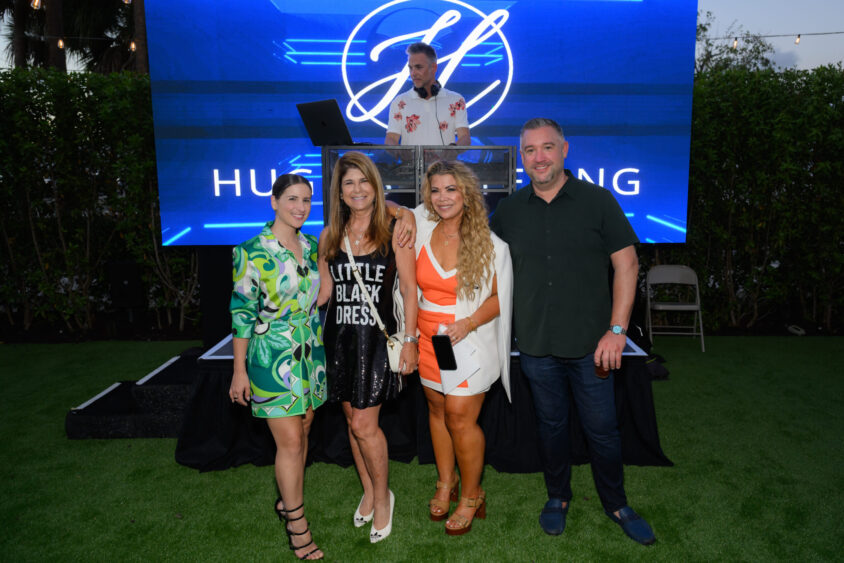
    Lifestyle and South Florida Business & Wealth gathered friends, partners, and cover subjects at Palm Garden Event House for a lively night celebrating the newest issues of both magazines. Guests mingled in the courtyard and inside the venue, posing for photos, catching up with colleagues, and toasting the covers featuring Anna DeFerran and Brad Tuckman.

    The evening brought together many of the people who regularly appear in the pages of both publications, from business leaders and philanthropists to creatives and longtime supporters, making the party feel as much like a reunion as a celebration.

    Browse the gallery below for moments from the night.

    The post Inside Our March Cover Party at the New Palm Garden Event House appeared first on Lifestyle Media Group.

  • A Week of Outfits: Laura Tully

    A Week of Outfits: Laura Tully

    A Week of Outfits: Laura Tully

    “To me, a good outfit is one I don’t have to think about too much,” says Laura Tully, a personal wardrobe stylist who lives in Boise, Idaho, with her husband and three kids.… Read more

    The post A Week of Outfits: Laura Tully appeared first on Cup of Jo.

  • H’s Allergy Supplement Line Up

    H’s Allergy Supplement Line Up

    Spring is springing! And with it… pollen.

    I can attest to this because we went biking on the Swamp Rabbit Trail this weekend and my sneezes started to kick up. I could also feel a little congestion in my ears that reminded me that with the gorgeous sunshine and warm weather comes blooming trees, flowers, and grasses.


    But you know who wasn’t sneezing? And even more importantly so, who didn’t have itchy eyes? H! Halleluiah.

    See all my allergy season picks in one spot!

    I’ve shared our history with seasonal allergies before but for the sake of ease, I’ll share the brief version again.

    I’ve had seasonal allergies for years. Anyone been around long enough to remember when I used those super attractive nose filter stickers while pregnant? I would do all the regular recommendations- showers at night, saline nasal rinse, medicine when needed, etc, and just tough it out for the most part.

    Then a few years ago H started getting bad spring allergies- so bad that her poor eyes were itchy, red, and swollen. I remember her having to lie on the couch with a cold rag across her face and it just broke my heart. So I went it search of help at the local allergist office.

    After all the testing, allergy shots were recommended, so we in a show of solidarity, I decided to get them, too. We went multiple times a week while our immunity build up and slowly tapered off and… they worked like a charm!! We were so thrilled that we didn’t need any allergy medication and we felt great when everything went into bloom.

    Fast forward to our move. We joined a new allergy clinic and they had to mix new serums for us. We had to build up again but we did it, driving 45 minutes one way to get the shots. We did this for months, only to realize that the new blend wasn’t working for either one of us. Between the drive, the cost (no longer covered by insurance), and the lack of efficacy, we stopped.

    Instead I reached out to a naturopath for H. We had a virtual appointment and followed up a few days later with her recommended plan. I sent it to a few naturally minded friends to get their thoughts and found out it was very similar to what they had found success with for seasonal allergy suffering as well.

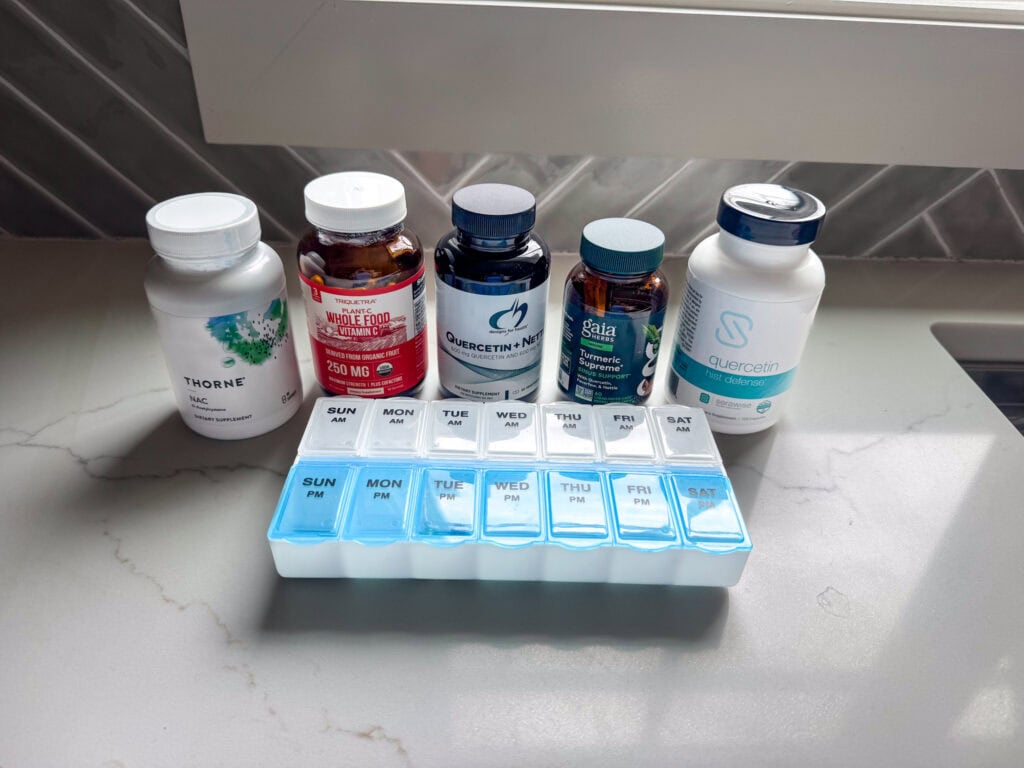
    With an optimistic mindset, I filled an AM/PM organizer with her supplements and had her start taking them.


    Seasonal Allergy Supplements that Work

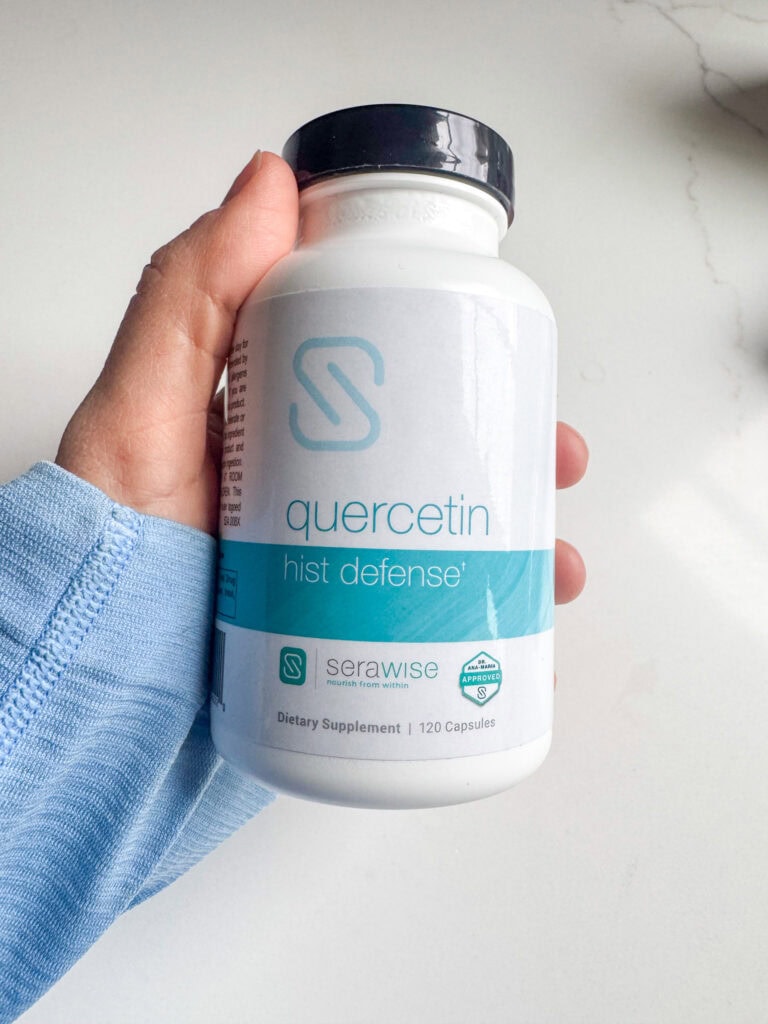
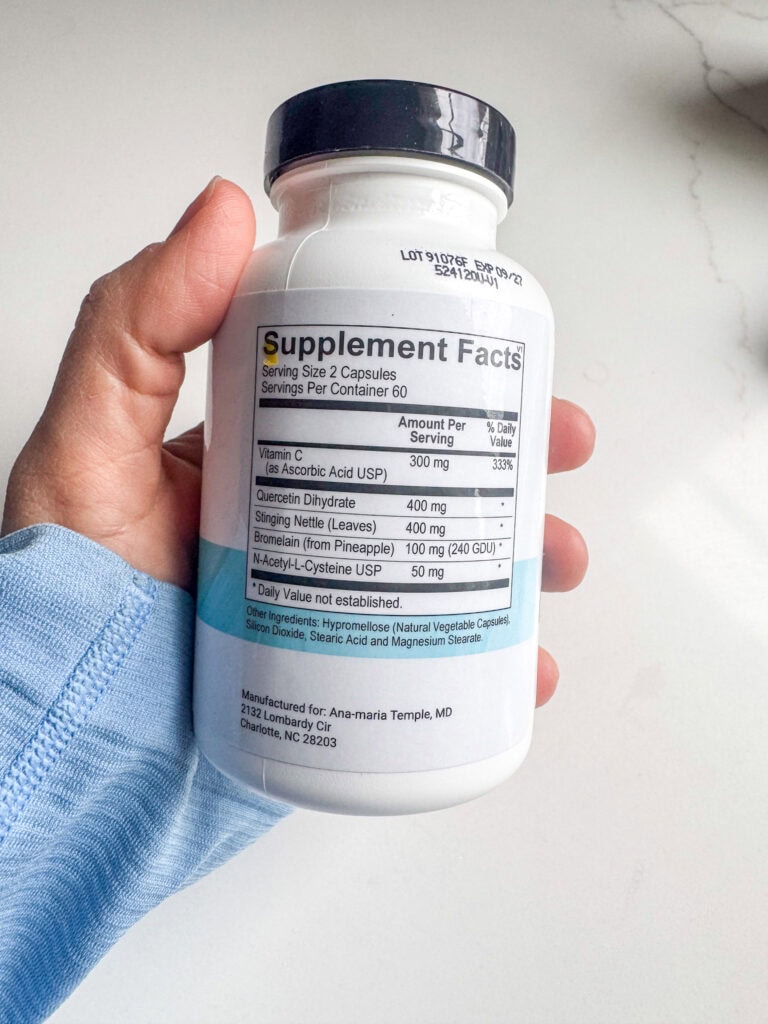
    1. Quercetin + Nettles:  1 capsule twice a day – morning and evening- may increase to 2 capsules twice a day if needed for further antihistamine help
    2. Vitamin C:  about 250mg once in the morning – break open the capsule and empty half of the contents into a spoonful of applesauce (will probably taste a little tart)- may try increasing to a full capsule, reducing the amount if loose stool occurs
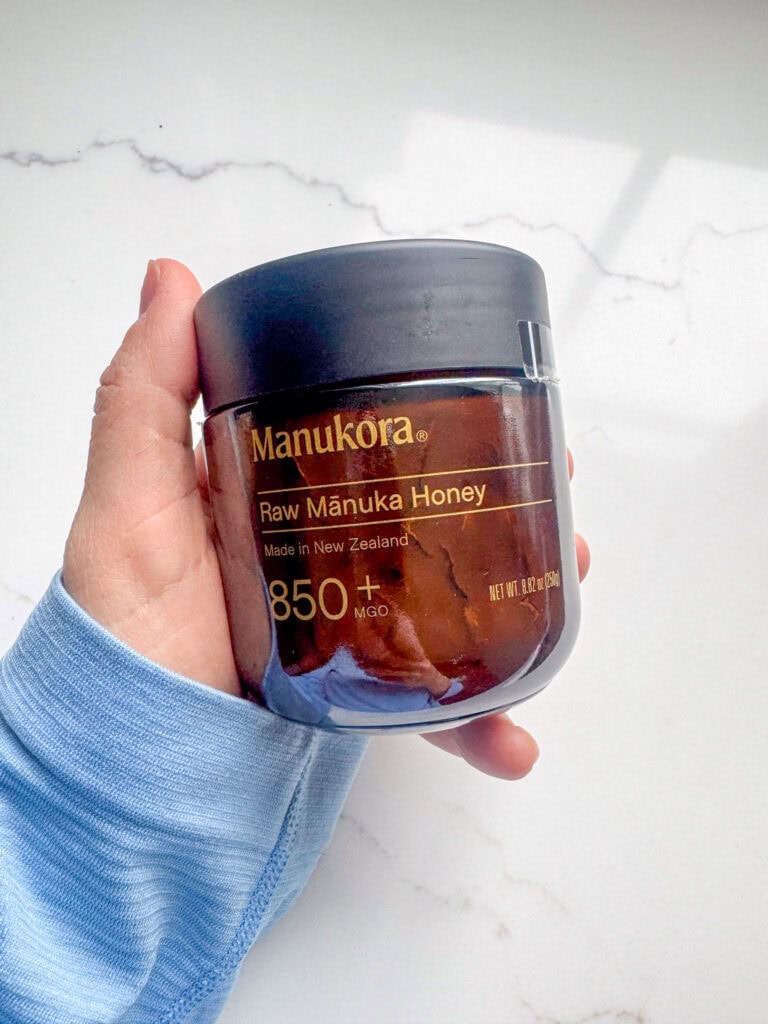
    3. Manuka Honey: 1/2 – 1 tsp twice a day – take at least 250 MGO in summer and at least 550 MGO in winter. (Use code AHS for 10 free travel sticks with order!)
    4. For the Spring, Turmeric Supreme Sinus Support:  1 capsule twice a day 
      – can increase to 1 capsule three times a day  (or 2 capsules twice a day)
      – continue the Quercetin + Nettles as well
    5. *NAC:  1 capsule twice a day with foodon an as needed bases for congestion, mucus, phlegm, or fluid in the ear

    David and I have been taking this blend (use code AHS for a discount!) that I had on hand and I really like it because it combines the vitamin C, quercetin, and stinging nettle. My allergies usually come a bit later, like in May, so I’ll keep this up but switch to H’s full line up if I find myself struggling.

    Finally, I’m still going strong with my nasal saline mist and recommend the girls do the same. I swear it helped me stay well during germ season and flushing out any allergens/irritants before bed at night can only be helpful during allergy season, too.


    I’m no doctor so I’m not prescribing in anyway, but just sharing the line up we’ve had success with in case you’ve been fighting the good fight with the blooming trees and grasses, too! Do you struggle with allergies? What do you find helps you this most?

  • The Best Hair Mask of All Time for Dry, Damaged Hair

    The Best Hair Mask of All Time for Dry, Damaged Hair

    When your hair feels dry, dull, or damaged, a good hair mask can make a bigger difference than almost any other product in your routine. A great formula doesn’t just temporarily smooth your hair; it restores moisture and helps strengthen strands over time.

    Over the years, I’ve tested tons of different hair masks in search of one that delivers on hydration, shine, texture repair, and overall hair health. Some were decent, some didn’t work for my hair at all, and a few stood out as real favorites.

    In this post, I’m sharing the best hair masks I’ve tried for dry, damaged hair, including the one I consider the best of all time.


    I have posts on how to make your hair grow faster, what the benefits of hair oiling are, and how to get more volume in your hair if you’re interested in those as well.

    About My Hair

    Before we get into the best hair masks, it helps to understand my hair type because what works for one person doesn’t always work for another.

    My hair is fine in texture but fairly dense, which means it can get weighed down easily if a product is too heavy. At the same time, it’s also prone to dryness and breakage, especially toward the ends. Because I heat-style my hair regularly, hydration and strengthening are both important for keeping it healthy, which is a big reason for my full hair care routine.

    Over the years, I’ve dealt with things like dry ends, dullness, and occasional breakage. So when I’m testing a hair mask, I’m looking for something that restores moisture and shine without leaving my hair flat.

    In general, my hair responds best to formulas that are:

    • Hydrating but lightweight
    • Strengthening without being protein-heavy
    • Smoothing and shine-boosting

    Anything overly rich or oily tends to weigh my hair down, which made finding the right hair mask a bit of a process.

    The Hunt for the Best Hair Mask

    If you’ve ever searched for the best hair mask for dry, damaged hair, you know there are a lot of options.

    Some formulas focus on hydration. Others prioritize bond repair or scalp health. And some masks are designed specifically for curls or thicker hair types.

    Over the years, I’ve tested a lot of different deep conditioners and masks, from luxury salon formulas to viral internet favorites. So, when I’m evaluating a hair mask, a few things matter most:

    1. First, hydration. A good mask should noticeably soften the hair and improve moisture levels without making it greasy.
    2. Second, strength and elasticity. Ingredients like keratin, collagen, and other proteins can help reinforce the hair structure and prevent breakage.
    3. And finally, the way my hair looks and feels after styling. The best masks leave my hair smoother, shinier, softer, and easier to manage after I blow-dry it.

    After trying so many options, one mask continues to stand out above the rest.

    The Best Hair Mask of All Time

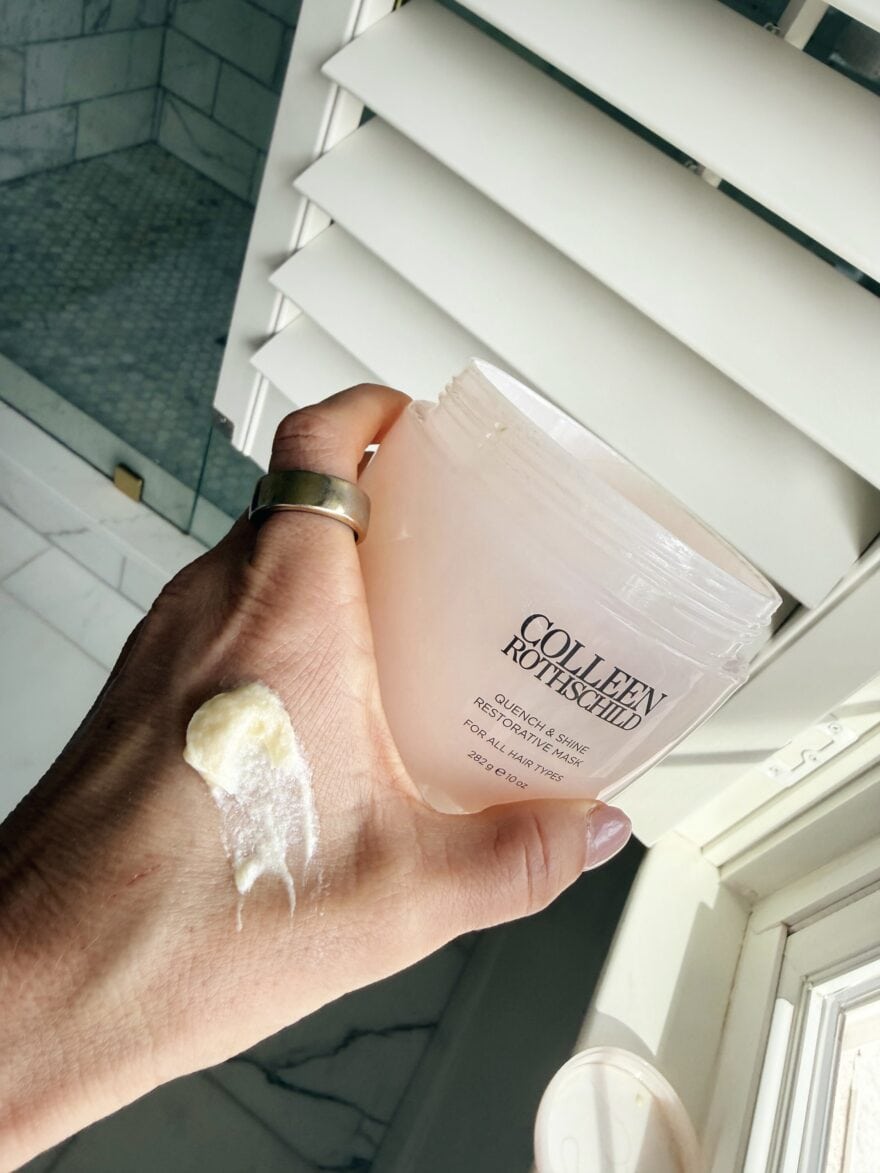
    Colleen Rothschild Quench & Shine Restorative Mask

    If I could only recommend one hair mask, this would be it.

    The Colleen Rothschild Quench & Shine Restorative Mask is easily the best hair mask I’ve used for restoring dry, damaged hair (it’s also one of my favorite Colleen Rothschild products). I’ve gone through multiple jars over the years, and it’s still the one I come back to whenever my hair needs a reset.

    The formula manages to be deeply hydrating while still feeling lightweight, which is exactly what fine hair needs.

    Why It Works So Well

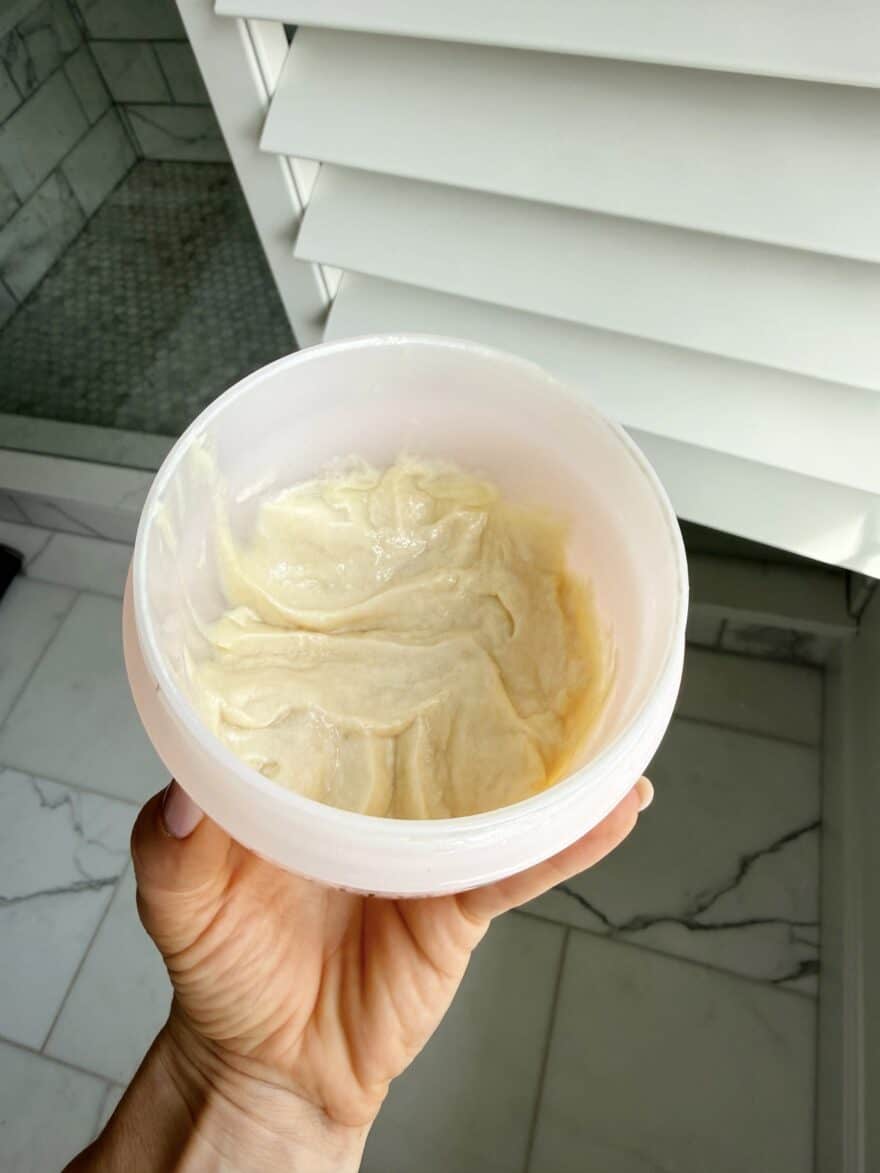
    This hair mask is packed with nourishing ingredients like argan oil and hyaluronic acid, which help restore moisture and improve the overall texture of the hair. Instead of sitting heavily on the hair, it actually absorbs well and helps support texture and elasticity, and reduces frizz and flyaways.

    Every time I use it, my hair feels noticeably healthier. My ends look smoother, and my hair feels softer. Not to mention, it styles much more easily afterward.

    It’s one of the few masks that gives my hair that smooth, glossy look without weighing it down.

    Texture & Scent

    The texture is creamy but not overly thick, which makes it easy to distribute through wet hair in the shower.

    It rinses clean without leaving residue, and the scent is soft and fresh without being overpowering. I find it to have a warm, sweet aroma that’s soft and very pleasant (I don’t like anything that smells too strong).

    How I Use It

    I typically use this mask once or twice a week in place of conditioner.

    After shampooing, I apply it from mid-lengths to ends and leave it on for about 5–10 minutes while I finish the rest of my shower.

    Once my hair is blow-dried, the difference is immediately noticeable. Smoother texture, more shine, no frizz, no flyaways, and hair that just feels healthier overall.

    If your hair is dry, damaged, or lacking shine, this is the one you need to try.

    Honorable Mention Hair Masks

    While the Colleen Rothschild mask is my top pick, there are a few other hair masks that are worth mentioning, depending on your hair’s specific needs.

    K18 Leave-In Molecular Repair Hair Mask

    If your hair has experienced serious damage from bleaching, coloring, or heat styling, the K18 Leave-In Molecular Repair Hair Mask is a really impressive treatment.

    Unlike a traditional deep conditioner, this mask focuses on repairing keratin bonds within the hair structure. It’s technically a leave-in treatment rather than a rinse-out mask, and a little goes a long way.

    It’s not primarily a hydration mask, but it can dramatically improve strength and elasticity in damaged hair.

    JavaScript is currently disabled in this browser. Reactivate it to view this content.
    Moroccanoil Intense Hydrating Mask

    The Moroccanoil Intense Hydrating Mask is a great option for hair that needs extra moisture.

    The formula is rich in argan oil and deeply conditions dry strands, leaving hair soft and silky. I tend to reach for this type of mask more in the winter when my hair feels especially dehydrated.

    Because it’s slightly richer, it tends to work best for medium to thicker hair types.

    JavaScript is currently disabled in this browser. Reactivate it to view this content.

    Olaplex No. 8 Bond Intense Moisture Mask

    Olaplex is well known for its bond-building technology, and this Bond Intense Moisture Mask combines repair with hydration.

    It helps strengthen hair that has been damaged by coloring or heat styling while also improving softness and shine. If your hair needs both moisture and structural repair, this is a solid option.

    JavaScript is currently disabled in this browser. Reactivate it to view this content.

    Hair Masks That Didn’t Make the Cut

    Not every hair mask works for every hair type, and there were a few I tested that simply didn’t work well for my hair.

    Briogeo Don’t Despair, Repair! Deep Conditioning Mask

    The Briogeo Deep Conditioning Mask is very popular, but it didn’t leave my hair feeling as smooth or shiny as I expected. While the formula contains nourishing ingredients, my hair still felt a little dry afterward, so it wasn’t the right one for me.

    Christophe Robin Regenerating Mask with Prickly Pear Oil

    This is a beautiful, luxurious mask from Christophe Robin, but the fragrance was stronger than I prefer in hair products. The formula itself is hydrating, but scent plays a big role in whether I’ll continue using something regularly since I’m extremely sensitive to scents.

    Davines NOUNOU Hair Mask

    Davines NOUNOU Hair Mask is very rich and nourishing, but unfortunately, it was too heavy for my fine hair. Instead of feeling soft and bouncy, my hair felt weighed down after using it. For thicker or coarser hair types, this might work beautifully, but it wasn’t the right match for my hair texture.

    Final Thoughts

    A good hair mask can make a huge difference if your hair feels dry, brittle, or damaged. The right formula can restore moisture, improve elasticity, and help prevent breakage over time.

    After testing countless options, the Colleen Rothschild Quench & Shine Restorative Mask is still the one I reach for again and again. It gives my hair exactly what it needs in hydration, softness, shine, and even overall hair health without ever weighing it down.

    If you’re searching for the best hair mask for dry, damaged hair, this is the one I hands down recommend starting with.

    Other Posts You Might Like:

    Shop The Post

    JavaScript is currently disabled in this browser. Reactivate it to view this content.

    The post The Best Hair Mask of All Time for Dry, Damaged Hair appeared first on TeriLyn Adams.

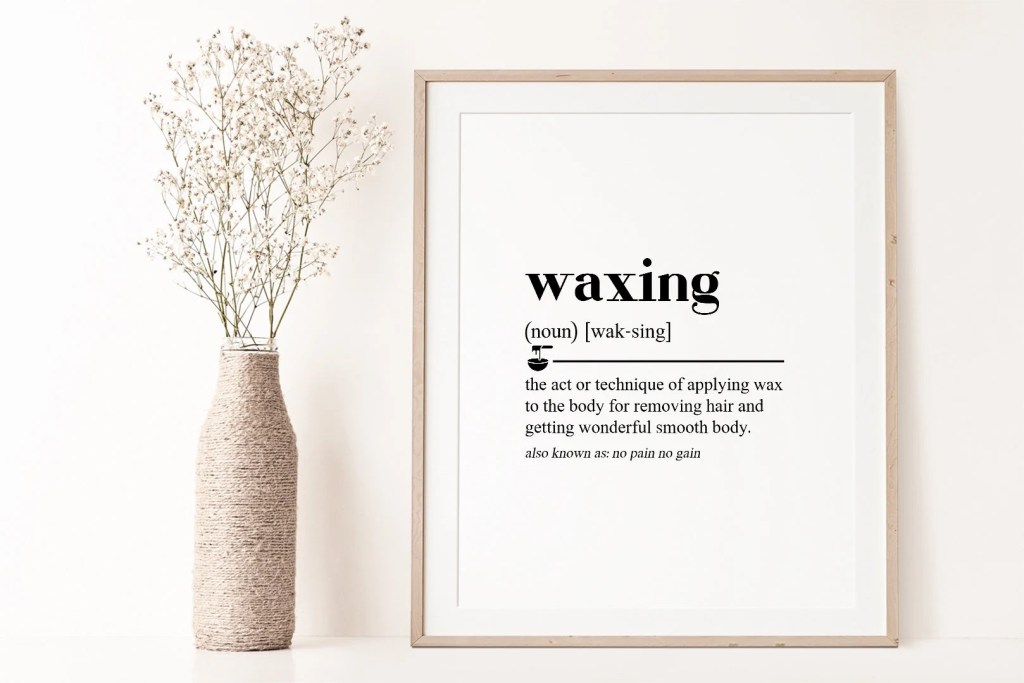
  • Waxing!

    Waxing!

    Women remove hair from legs, arms, and underarms.

    For hygiene purposes.

    Feels clean and soft.

    Some ladies need waxing frequently, and some don’t.

    Depending on their hair growth!

    Their skin becomes smooth afterwards.

    However, it pains them while waxing.

    There is no gain without pain.

    This phrase is perfect for waxing.

    All men would cry loudly if they needed to wax!

  • How to Return to Work After Kids: A 2026 Guide for the Modern Mom

    There’s a specific kind of silence that settles over a house once the kids are finally in school or the morning chaos has subsided. For years, that silence might’ve been your cue to start the laundry or finally drink a lukewarm cup of coffee. But lately, that silence feels different. It feels like an opening. Honestly, it’s a little bit terrifying, isn’t it?

    If you’re reading this, you’re likely standing at the edge of a major transition. You’ve spent years managing a household, navigating developmental milestones, and becoming a master of crisis management. Now, you’re ready to bring those skills back into a professional setting.

    The workforce in 2026 looks different from when you may have stepped away. Flexibility isn’t a luxury anymore, and the soft skills you’ve sharpened at home are more valuable than ever. This isn’t just about updating a document — it’s about reclaiming a piece of your identity.


    🧭 Finding Your Bearings

    Before you start applying to every opening on your feed, take a moment to breathe. Re-entry is a marathon, not a sprint. Start by auditing your current life:

    • How many hours can you realistically commit?
    • Do you need fully remote, or are you craving office interaction?
    • What are your non-negotiables around schedule and flexibility?

    In 2026, the hybrid model has become the standard for most industries — giving you more leverage than ever to find a balance that actually works for your family. Understanding your boundaries early prevents burnout three months into a new role. Trust me, I’ve seen it happen.


    📄 Translating the Gap

    One of the biggest hurdles moms face is the perceived “gap” on their resume. It’s time to stop viewing those years as a void. You weren’t “off.” You were operating in a high-stakes environment — coordinating logistics, managing budgets, navigating complex schedules. That’s project management. That’s operations. That’s the stuff that keeps companies running.

    When you sit down to build your profile, use a free resume builder to structure your experience without the stress of formatting from scratch. Many modern platforms offer templates designed specifically for career changers and re-entry candidates — they take the blank page problem off your plate entirely.

    “Those years weren’t a gap. They were a masterclass in logistics, crisis management, and getting things done under pressure.”

    📚 Upskilling Without the Overwhelm

    You don’t need a new degree to be relevant. You need targeted, efficient upskilling. Technology moves fast, but micro-credentialing makes it manageable — short, focused courses you can complete during nap times, after bedtime, or whenever you carve out 30 minutes.

    ✅ Where to Start

    • ✅ Project management tools: Asana, Monday, Notion — employers use them daily
    • ✅ AI-assisted workflows: Basic prompting skills are now a workplace expectation
    • ✅ Industry refreshers: Most fields have short, focused catch-up courses online
    • ✅ Certifications: Coursera, LinkedIn Learning, or Google Career Certificates

    Even a single recent certification on your profile signals that you’re proactive and ready for the modern workplace. You’ve still got it — now you just have receipts.


    🤝 Networking in a New Era

    Large job boards can feel like shouting into a void. The better move? Your existing circle. Reach out to former colleagues, friends, and even other school parents. Many opportunities never make it to a public listing.

    When you do reach out, be specific — “I’m looking to get back into marketing coordination” is far more actionable than “I’m open to anything.” It makes it much easier for people to help you when they know exactly what you’re looking for. The U.S. Department of Labor’s Women’s Bureau also offers research and resources specifically focused on women in the workforce — worth a bookmark as you map out your path.


    🏠 Managing the Logistics and the Guilt

    Let’s talk about the elephant in the room. Going back to work often comes with a side of mom guilt — worry about sick-day coverage, missed moments, and feeling like you’re leaving part of yourself behind. Practical preparation is the best antidote:

    • Dry run week: Practice the commute and morning routine before your actual start date
    • Childcare backup: Secure your primary plan early and always have a plan B
    • Daily structure: Build healthy daily habits into your routine before day one
    • Stress management: Get ahead of it — here’s how to reduce stress during big life transitions

    There will be days when the house is messy and dinner is cereal. That’s okay. You’re modeling resilience and ambition for your children, and that’s a gift in itself. They see you trying. They see you growing.


    💪 Your Value Is Non-Negotiable

    Employers in 2026 are actively looking for stability, emotional intelligence, and the ability to multitask under pressure. Moms have all three in spades. You aren’t “behind.” You’re arriving with a refreshed perspective and life experience no entry-level candidate can match.

    If self-doubt creeps in, spend some time learning to love yourself again — confidence isn’t just a career asset, it’s the foundation everything else is built on.

    “You aren’t starting over. You’re starting from experience — and that changes everything.”

    Take it one step at a time. Update that resume, send that first email, and trust that your professional journey is just beginning its next exciting chapter. You’re ready.

    The post How to Return to Work After Kids: A 2026 Guide for the Modern Mom appeared first on Better Living.

  • SWITCH ON

    SWITCH ON

    Photos / Azur Mele  @azurmele    www.azurmele.com
    Model / Talent / Jenna Talbot  @jenna_talbot
    Makeup / Dina Vibes @dinavibes_
    Hair / Dina Vibes @dinavibes_
    Styling / Dina Vibes @dinavibes_
    Location /Velvet Angel Studios @velvetangelstudio

    Gloves: Wing Weft Gloves // @wingweftgloves Corset: Stylist’s Own Skirt: Malene Birger // @bymalenebirger Stockings: Vintage Dior // @dior Heels: Stuart Weitzman // @stuartweitzman
    Fur Coat: The Real Real // @therealreal Lingerie: Agent Provocateur // @agentprovocateur Stockings: Wolford // @wolford

    Bra: Skin on Skins // @skinonskins Skirt: Malene Birger // @bymalenebirger Faux Fur Shawl: Gloves: Cornelia James // @cornelia_james


    Lingerie: Agent Provocateur // @agentprovocateur Gloves: Cornelia James // @cornelia_james

    Dress: La Femme

    Dress: La Femme Heels: Schutz // @schutz Gloves: Cornelia James // @cornelia_james

    Dress: Stylist’s Own Stockings: Vintage Dior // @dior Heels: Stuart Weitzman // @stuartweitzman Gloves: Cornelia James // @cornelia_jame

    Dress: Vintage Harry Keiser Stockings: Vintage Dior // @dior Heels: Stuart Weitzman // @stuartweitzman Gloves: Cornelia James // @cornelia_james


    Dress: Vintage Harry Keiser Stockings: Vintage Dior // @dior Heels: Stuart Weitzman // @stuartweitzman Gloves: Cornelia James // @cornelia_james

    Dress: Stylist’s Own Heels: Schutz // @schutz

    Dress: Rachel Roy Jacket: Nasty Gal // @nastygal

    The post SWITCH ON appeared first on LADYGUNN.